Tattoo Styles Guide: History, Examples & Artists | Club Tattoo
Browse by style

Pick a style to explore

Tap any style to jump to its history, hallmarks, example work and the artists who specialize in it. Not sure what you're looking for? Most of our artists work across several styles and are happy to help you shape an idea.

01

American Traditional

United States · late 1800s–1950s

Bold lines, bright color and iconic sailor-era imagery built to last a lifetime.

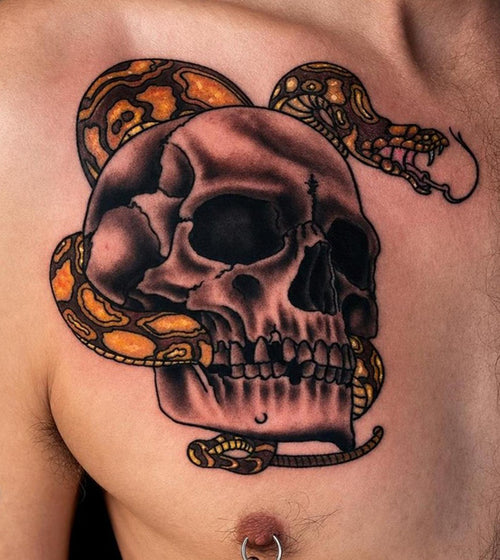
American Traditional grew up in the port towns, carnivals and military bases of the late 1800s and early 1900s. Sailors and soldiers collected tattoos as souvenirs, good-luck charms and badges of where they had been, and tattooers hung painted sheets of ready-made designs, called flash, on their shop walls so customers could point and pick.

The style was shaped by the tools of its time. Samuel O'Reilly's 1891 patent for an electric tattoo machine made tattooing faster, and a limited set of pigments that held well in the skin (black, red, green and yellow) set the palette. Tattooers like Norman "Sailor Jerry" Collins, working on Honolulu's Hotel Street from the 1930s into the 1970s, refined the look and pushed for cleaner, safer practice.

The rule that made it work still holds: bold will hold. Heavy outlines and solid color keep the design readable decades later, which is why the swallows, roses, eagles, anchors and daggers on those old flash sheets still look sharp on skin today.

What to look for
  • Heavy black outlines
  • Limited, saturated palette
  • Solid color fills, minimal blending
  • Classic flash icons
Good to know about American Traditional

Rooted in early maritime and military history, American Traditional is defined by rich, saturated primary color palettes, heavy black outlines, and iconic imagery like daggers, roses, eagles, and anchors. Built on the philosophy that "bold holds," this style prioritizes graphic clarity and timeless legibility over soft realism.

Q&A:

Q: Why are American Traditional tattoos drawn with thick black outlines? A: Heavy outlines serve as a structural barrier for pigment, preventing ink migration over time and keeping the design crisp and readable for a lifetime.

Q: Can American Traditional tattoos be customized at Club Tattoo? A: Absolutely. While inspired by classic flash heritage, our artists craft bespoke pieces tailored to your personal journey and anatomical flow.

02

Neo-Traditional

United States · 1980s–present

American Traditional's strength with richer color, ornate detail and more depth.

Neo-Traditional grew out of American Traditional in the 1980s and '90s, as tattooers kept the bold outlines and readability of the old flash but wanted more room for detail and color.

It borrows heavily from Art Nouveau, especially the decorative frames and flowing hair of Alphonse Mucha, as well as Victorian ornament and jewelry. Line weights vary within a single piece, palettes widen into jewel tones and earthy colors, and shading adds real dimension.

Common subjects include animal portraits, women's faces, florals, ornate frames, jewels and lanterns, all designed to hold up over time like traditional work while looking more lush and detailed.

What to look for
  • Bold but varied line weights
  • Rich jewel-tone palettes
  • Art Nouveau ornament and frames
  • Animals, portraits and florals
Good to know about Neo-Traditional

Neo Traditional evolves classic American Traditional by incorporating variable line weights (heavy outer borders with fine interior details), deep dimensional shading, and Art Nouveau or Art Deco aesthetic flourishes. Subject matter ranges from detailed flora and fauna to stylized portraiture, rendered in rich multi-tone color palettes.

Q&A:

Q: What color palettes are typical in Neo Traditional tattoos? A: Neo Traditional expands beyond primary colors to include jewel tones, muted pastels, magenta, teal, and deep gold for richer visual texture.

Q: How do artists achieve depth in Neo Traditional designs? A: Depth is created by pairing heavy structural contour lines with delicate internal linework and multi-tone color gradients.

03

Japanese (Irezumi)

Edo-period Japan · 1700s–1800s

Large, flowing compositions of koi, dragons and folklore heroes from a centuries-old tradition.

Japanese tattooing, irezumi, flourished in the Edo period (1603–1868). Its look was shaped by ukiyo-e woodblock prints, and especially by Utagawa Kuniyoshi's 1827 prints of the heroes of the Suikoden (Water Margin), whose tattooed bodies inspired firefighters, laborers and townspeople to get full-body work of their own.

Traditional masters, called horishi, worked by hand with the tebori technique, using bundles of needles fixed to a wooden or metal handle. The Meiji government banned tattooing in 1872. The ban was lifted in 1948, but the art kept an outsider reputation in Japan even as its influence spread around the world.

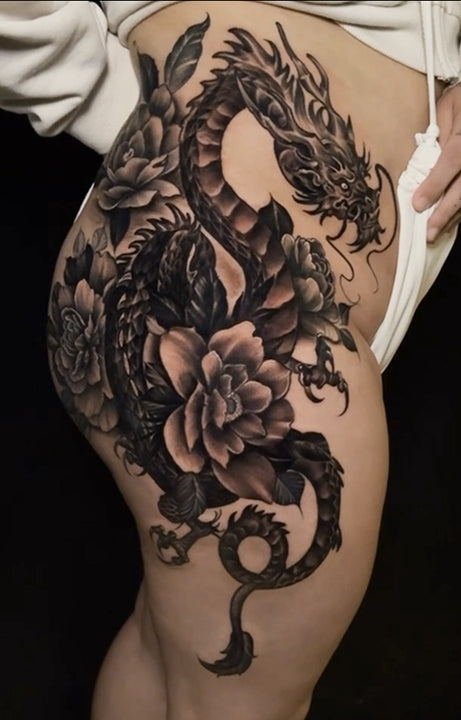
Irezumi is designed for the whole body. A main subject such as a koi, dragon, tiger, phoenix, hannya mask or legendary hero is set into a background of waves, wind bars, clouds and seasonal flowers that ties the piece together. Each element carries meaning, and sleeves, backpieces and bodysuits are planned to flow with the muscles underneath.

What to look for
  • Large-scale compositions
  • Wind bars, waves and clouds
  • Koi, dragons, tigers and hannya
  • Placement that follows the musculature
Good to know about Japanese

Traditional Irezumi is an ancient art form governed by rich mythology, formal rules, and anatomical flow. Featuring dragons, koi fish, phoenixes, samurai, and geishas set against background bars of wind, waves, and clouds, Irezumi pieces are engineered to fit large anatomical areas like sleeves, backs, or full bodysuits.

Q&A:

Q: What do common motifs in Japanese Irezumi represent? A: Every symbol carries deep meaning—for example, Koi represent perseverance and ambition, while Dragons symbolize protection, strength, and wisdom.

Q: Why are dark background wind and wave bars used? A: Background bars unify individual elements into a single cohesive piece, creating intense black contrast that makes central subjects stand out.

04

Modern Japanese (Neo-Irezumi)

Japan meets the West · 1970s–present

Traditional Japanese subjects and layout, reimagined with a contemporary palette and approach.

In the 1970s, Western tattooers began studying directly with Japanese masters. Ed Hardy's apprenticeship with Horihide in Gifu in 1973 is one of the best-known examples, and that exchange carried irezumi's composition and imagery into shops around the world.

Modern Japanese, sometimes called Neo-Irezumi, keeps the backbone of the tradition, with bold subjects, flowing backgrounds and body-wide planning, while opening it up to new influences. Artists bring in brighter and more varied palettes, deeper shading, illustrative and realistic rendering, and subjects from outside classical folklore.

The result respects where the style came from while letting each artist's voice come through, whether that is a traditional koi in an unexpected palette or a familiar layout built around a completely new subject.

What to look for
  • Japanese layout and backgrounds
  • Expanded, vivid color
  • Dimensional modern shading
  • New subjects in a classic structure
Good to know about Modern Japanese

Modern Japanese (Neo-Irezumi) respects the foundational symbolism and anatomical flow of traditional Irezumi while incorporating modern color theory, variable line weights, cinematic lighting, and dynamic depth. It breaks rigid historical rules to create dimensional, high-contrast visual narratives.

Q&A:

Q: How does Neo-Irezumi differ from Traditional Irezumi? A: Neo-Irezumi uses modern color palettes, variable line contrast, and dynamic depth while giving artists freedom from strict historical constraints.

Q: Can Modern Japanese styles be adapted for smaller placements? A: Yes. While traditional Irezumi shines on large bodysuits, Modern Japanese techniques can be effectively customized for forearms, thighs, or calves.

05

Blackwork

Ancient roots · modern revival from the 1980s

All-black designs, from solid fills to ornamental patterns, that lean on contrast and negative space.

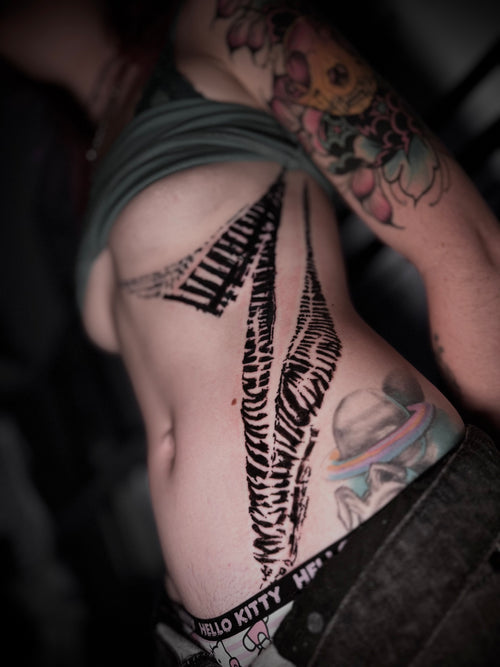
Working only in black ink is the oldest approach to tattooing there is. Many of the world's earliest traditions, from Polynesia and Borneo to the Philippines and the Arctic, used dense black patterns to mark lineage, achievement and protection.

Modern Blackwork took shape in the 1980s and '90s, when tattooers revived and reinterpreted those traditional patterns, then widened in the 2000s to borrow from European woodcuts, engraving, ornament and graphic design. Today the label covers everything from heavy solid fills and bold geometric bands to delicate ornamental linework.

What ties it together is contrast. With no color to lean on, Blackwork depends on strong shapes, the balance of ink and bare skin, and placements that follow the body's form. Dense carbon-black pigment also ages very well, and black is one of the most effective tools for covering up an old tattoo.

What to look for
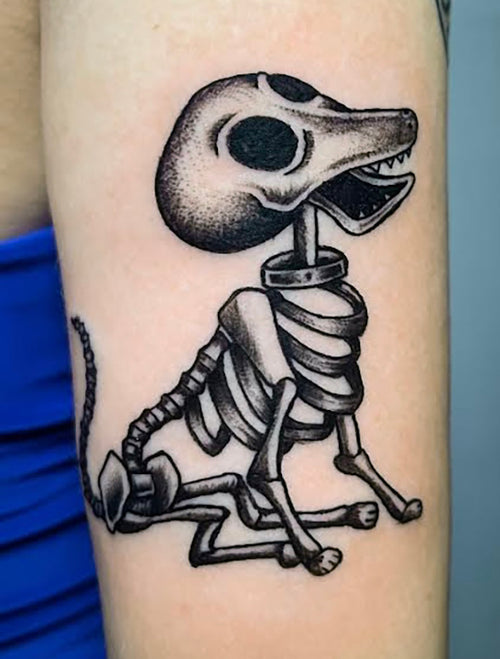
  • Black ink only
  • Solid fills and bold contrast
  • Deliberate negative space
  • Ornamental or patterned designs
Good to know about Blackwork

Blackwork encompasses a diverse spectrum of body art characterized exclusively by intense black ink. Ranging from dense, solid saturation to intricate ornamental linework and dark geometric patterns, this style emphasizes negative space, bold tonal contrast, and structural anatomical placement.

Q&A:

Q: Do Blackwork tattoos hold up better over time than color tattoos? A: Yes. High-density black carbon pigments maintain exceptional saturation, making Blackwork one of the most durable and long-lasting tattoo styles.

Q: Is Blackwork a good option for covering up old tattoos? A: Blackwork is ideal for cover-ups due to its ability to obscure old ink with saturated solid black fields and strategic negative space.

06

Chicano Style

Los Angeles · 1940s–1970s

Smooth black and grey, fine-line detail and imagery rooted in Mexican-American culture.

Chicano style was born in the Mexican-American neighborhoods of Los Angeles. Its roots run back to the pachuco culture of the 1940s, and the look itself was forged in prisons and on the street, where artists built machines from whatever they could find and worked with a single needle and black ink. That made fine lines and soft grey shading a necessity before it was a style.

In the late 1970s the look moved into professional shops. Good Time Charlie's Tattooland in East Los Angeles, where tattooers such as Jack Rudy and Freddy Negrete worked, helped bring single-needle black and grey into the mainstream and influenced realism tattooing worldwide.

The imagery comes from family, faith and neighborhood life: the Virgin of Guadalupe, praying hands, roses, payasas (clown girls), lowriders, clocks, portraits of loved ones and elegant script. It shares a visual language with lowrider art and murals and remains a personal statement of identity and heritage.

What to look for
  • Black and grey only
  • Smooth, soft gradients
  • Fine-line detail
  • Script, portraits and faith imagery
Good to know about Chicano Style

Originating from Southern California heritage, Chicano style art is renowned for ultra-smooth black and grey shading, delicate fine line contours, and distinct iconography. Common motifs include dramatic portraiture, payasas, lowriders, religious imagery, and elegant calligraphic script.

Q&A:

Q: What distinguishes Chicano style from standard black and grey realism? A: Chicano style blends fine-line calligraphic flow, cultural iconography, and smooth grey wash gradients tailored specifically to personal narrative and identity.

Q: How do artists keep fine line Chicano script from blurring? A: Our artists carefully scale and space letters according to anatomical movement, accounting for long-term ink maturation to preserve clean legibility.

07

Realism

Black and grey roots · modern era from the 1990s

Tattoos that look like photographs, built with smooth shading, depth and contrast instead of outlines.

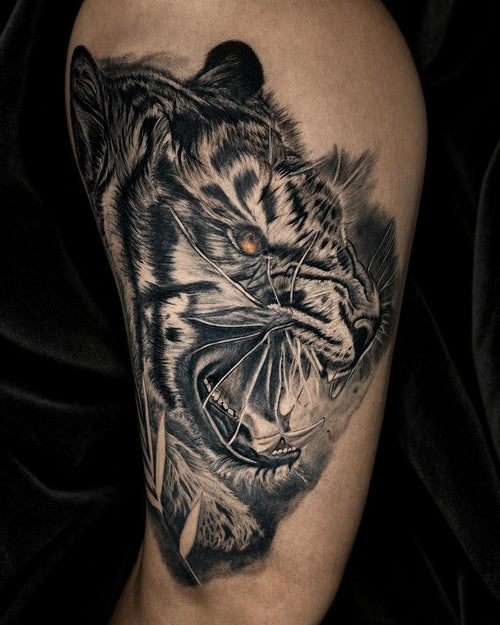
Realism aims to make a tattoo look like a photograph or a lifelike painting. Its foundation is the single-needle black and grey work of 1970s Los Angeles, which showed that soft gradients and fine detail were possible in skin.

From the 1990s onward, improved machines, larger shading needle groupings and more stable pigments let artists render nearly anything, from wildlife, landscapes and statues to objects and full scenes, with convincing light and texture. Color realism grew alongside black and grey as palettes expanded.

Good realism relies on contrast. Rather than outlines, the artist builds form with value, from the deepest blacks to bare skin highlights, so the image still reads clearly years later.

What to look for
  • No outlines; form built with shading
  • Strong contrast and depth
  • Black and grey or color
  • Photo-referenced detail
Good to know about Realism

Realism recreates subjects—animals, nature, surreal objects, and architecture—with photorealistic accuracy. Bypassing heavy black outlines, Realism relies entirely on fine tonal shading, value contrast, color blending, and precise light mapping to build three-dimensional volume and lifelike depth.

Q&A:

Q: Do realistic tattoos without outlines hold up over time? A: Yes, when executed with high value contrast—using deep black shadows to anchor delicate mid-tones and highlights over decades.

Q: What is the difference between Color Realism and Black & Grey Realism? A: Black & Grey uses varying carbon washes for a classic cinematic look, while Color Realism requires complex color theory and blending to recreate natural hues.

Club Tattoo artists for Realism

Book a consultation
08

Portrait

Black and grey roots · refined from the 1980s

Lifelike tattoos of people and pets, capturing a real likeness and expression.

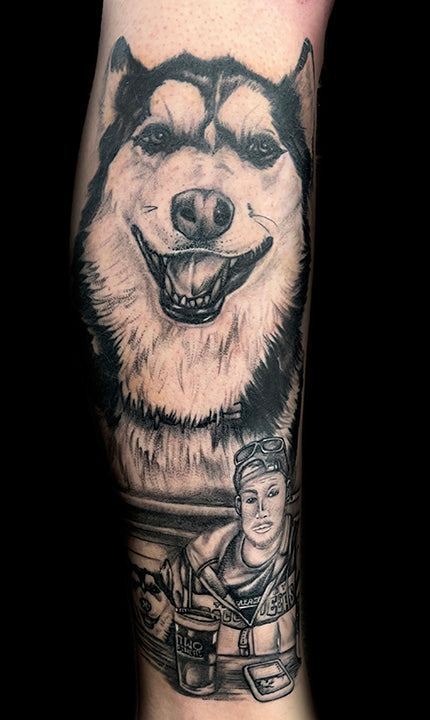
Portraits of loved ones have been part of tattooing for generations, but true photographic likeness arrived with fine-line black and grey techniques in the 1970s and '80s. Chicano artists in Los Angeles showed that soft, smooth shading could capture real faces in skin.

Better machines, needles and pigments in the decades since have pushed portraiture further, in both black and grey and full color. Today's portrait artists recreate skin texture, the light in someone's eyes and the subtle shape of an expression.

A portrait is one of the most technically demanding tattoos there is, since small errors change a face. The quality of the reference photo and placing the portrait at a size large enough to hold its detail matter as much as the tattooing itself.

What to look for
  • Photographic likeness
  • Smooth tonal shading
  • Black and grey or full color
  • Built from quality photo reference
Good to know about Portrait

Portraiture demands extreme technical mastery to translate a photographic facial image onto living skin. Focusing on exacting anatomical proportions, subtle skin texture, lifelike eyes, and accurate light reflection, this style is rendered in smooth black and grey wash or high-contrast realistic color.

Q&A:

Q: What type of reference photo is required for a portrait tattoo? A: High-resolution photos with clear directional lighting and sharp facial detail yield the best realistic translation onto skin.

Q: How do artists ensure a portrait tattoo ages well? A: Artists use strong shadow contrast and solid black anchor values beneath soft skin tones to keep facial features crisp as the skin matures.

09

Simple Realism

Contemporary · 2010s–present

Realistic subjects at a smaller, cleaner scale, with fewer layers and an approachable look.

Simple Realism takes the techniques of realism and pares them back. Subjects are rendered realistically, but with fewer tonal layers, cleaner backgrounds and a smaller footprint, so they fit wrists, forearms, ankles and other compact placements.

The approach rose with the popularity of fine-line and micro-realism in the 2010s, as more clients wanted lifelike pieces that felt light and personal rather than large-scale.

It is a great entry point for a first realistic tattoo: a flower, a pet, an object with meaning. Because it relies on fewer, well-placed values, the artist sizes it carefully so the image stays clear as the tattoo ages.

What to look for
  • Realistic but simplified
  • Small to medium scale
  • Clean or no background
  • Fewer, well-placed tones
Good to know about Simple Realism

Simple Realism isolates a single realistic subject—such as a flower, eye, butterfly, or architectural element—rendering it with photorealistic accuracy while omitting dense background shading. This creates a clean, elegant focal point with rich detail and breathing room.

Q&A:

Q: What makes Simple Realism different from full Realism tattoos? A: Simple Realism focuses exclusively on one detailed subject without surrounding background artwork, making it faster to execute and easier to integrate into existing collections.

Q: Is Simple Realism a good option for a first tattoo? A: Absolutely. It delivers the stunning detail of fine art realism in a clean, isolated composition during a lower-intensity session.

10

Fine Line

Los Angeles single-needle roots · mainstream in the 2010s

Delicate, precise linework for small, subtle and elegant pieces.

Fine Line tattooing uses a single needle or a very small needle grouping to make thin, precise lines. The technique has deep roots in the single-needle black and grey work of Los Angeles in the 1970s, where tattooers showed how much detail a fine needle could hold.

The style went mainstream in the 2010s. Studios in Los Angeles and New York became known for tiny, delicate pieces, and social media made botanicals, minimal symbols, script and micro-detail some of the most requested tattoos in the world.

Fine Line looks best when it is designed with aging in mind. Every tattoo softens a little as the skin changes, so a skilled artist sizes and spaces the lines so the piece still reads clearly in ten or twenty years.

What to look for
  • Single-needle or tight linework
  • Minimal or very soft shading
  • Small to medium scale
  • Botanicals, symbols and script
Good to know about Fine Line

Fine Line tattoos emphasize extreme delicacy and subtle sophistication, utilizing tight needle configurations—often single-needle setups—to produce thin, precise lines. This style spans minimalist geometry, micro-realism, subtle floral art, and understated typography without heavy outlines.

Q&A:

Q: Do Fine Line tattoos fade faster than bold traditional tattoos? A: Because fine lines use less pigment per millimeter, proper placement, skin health, and dedicated sun care are key to preserving their long-term sharpness.

Q: Can detailed concepts be converted into a Fine Line style? A: Most concepts translate beautifully into fine line art when properly scaled to allow enough breathing room between lines as the skin naturally matures.

11

Script / Lettering

As old as tattooing · roots in sailor banners and calligraphy

Names, words and phrases rendered in custom hand-lettered type.

Words are among the oldest tattoos there are. Sailors' banners reading "Mom" or a sweetheart's name were staples of early flash, and names, dates and mottos have remained some of the most meaningful pieces people wear.

Modern lettering draws from a wide range of traditions: classic calligraphy and blackletter, the flowing script of Chicano tattooing, sign painting, typography and graffiti. Good lettering artists draw custom letterforms rather than relying on fonts.

Lettering is a craft of its own. Spacing, letter size and stroke weight have to account for where the piece sits on the body and how ink settles over time, so the words stay legible for decades.

What to look for
  • Custom hand-drawn letterforms
  • Script, blackletter or block styles
  • Spacing designed for placement
  • Built to stay legible as it ages
Good to know about Script / Lettering

Script and Lettering convert written words into bespoke visual art. Ranging from fine line cursive and elaborate calligraphic flourishes to bold Chicano lettering, Gothic blackletter, and clean minimalist typography, custom lettering is tailored directly to complement anatomical curves.

Q&A:

Q: Why choose custom hand lettering over standard computer fonts? A: Computer fonts are designed for flat surfaces, whereas custom typography is mapped specifically to flow with muscle movement and body contours.

Q: How small can custom script be tattooed safely? A: While fine needles allow precise detail, our artists ensure letter spacing and sizing are optimized so text remains clear and legible as skin ages.

12

Geometric / Sacred Geometry

Ancient patterns · modern tattoo style from the 2000s

Precise shapes, symmetry and pattern inspired by mandalas and sacred geometry.

Geometric tattooing draws on some of humanity's oldest visual ideas. Mandalas from Hindu and Buddhist traditions, the interlocking stars of Islamic architecture, and figures like the Flower of Life and the Platonic solids have been used for centuries to express harmony, balance and the order of the universe.

As a tattoo style it took off in the 2000s and 2010s, as artists combined precise linework with dotwork, a shading method built from thousands of individual dots. Designs range from single symbols to full sleeves of repeating pattern that wrap the body.

Geometry leaves no room for error. Straight lines, perfect circles and true symmetry have to work on a curved, moving surface, so the best geometric pieces are planned around the anatomy of the specific placement.

What to look for
  • Symmetry and precise linework
  • Dotwork and stipple shading
  • Mandalas and sacred figures
  • Patterns mapped to the body
Good to know about Geometric / Sacred Geometry

Geometric body art focuses on structural balance, mathematical patterns, mandalas, and repeating shapes. Sacred Geometry incorporates universal mathematical proportions (such as the Golden Ratio or Flower of Life), combining sharp linework with precise dotwork (stippling) for balance, symmetry, and visual depth.

Q&A:

Q: Why is artist expertise so vital for geometric tattoos? A: Geometric art leaves no room for error; exact alignment and precision line placement are required to maintain overall symmetry and optical balance.

Q: What role does dotwork (stippling) play in sacred geometry? A: Dotwork introduces subtle, breathable shading gradients without harsh solid lines, adding three-dimensional depth to intricate mathematical patterns.

13

Illustrative

Engraving and illustration traditions · contemporary

Tattoos that read like a drawing or print, with visible linework and an artist's hand.

Illustrative tattooing borrows from the long history of printed and drawn images: Renaissance engravings, woodcuts, botanical plates, book illustration, comics and posters. Instead of hiding the linework, the style puts it on display, so the finished tattoo looks like it was drawn or printed on the skin.

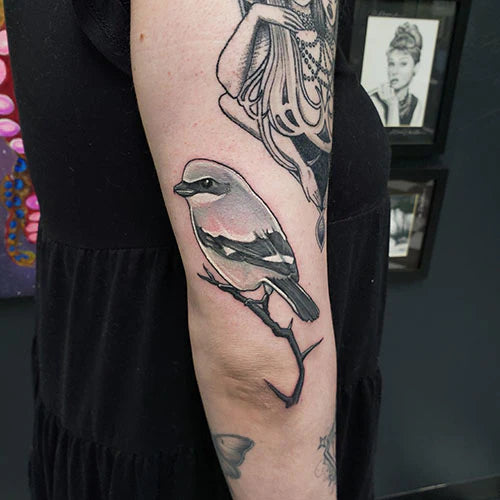
It sits between American Traditional's bold structure and realism's smooth shading. Artists build form with hatching, stippling, varied line weight and selective color, and each one tends to develop a recognizable personal hand.

Because it is defined by approach rather than subject matter, Illustrative work can be anything from a single animal or flower to an entire scene, in black and grey or full color.

What to look for
  • Visible, varied linework
  • Hatching and stipple shading
  • Black and grey or selective color
  • Drawn or printed look
Good to know about Illustrative

Illustrative bridges classical fine art techniques—such as woodcut etching, crosshatching, stippling, and painterly color blending—with structural tattoo linework. Rather than imitating photorealism, it highlights the visible artistic technique, line variance, and creative expression of the artist.

Q&A:

Q: How does Illustrative style differ from Realism? A: Realism mimics photographs without visible outlines, whereas Illustrative art highlights hand-drawn linework, stylized textures, and artistic crosshatching.

Q: Does Illustrative style work better in Black & Grey or Color? A: Both excel—Black & Grey relies on linework texture for depth, while Color Illustrative uses painterly hues anchored by bold structural outlines.

14

Watercolor

Contemporary · popular from the 2010s

Soft washes, bleeds and splashes of color that look painted onto the skin.

Watercolor tattooing imitates the look of a watercolor painting: soft washes, colors bleeding into each other, drips and splatters, often with little or no black outline. It became widely popular in the early 2010s as artists with fine-art backgrounds brought painting techniques into tattooing.

The style changed what people thought a tattoo could look like, moving away from hard edges toward something looser and more expressive.

Because soft color without structure can fade or blur over time, many artists anchor watercolor pieces with some black linework or a strong underlying shape. That keeps the painterly effect while helping it age well.

What to look for
  • Soft washes and color bleeds
  • Splashes and drips
  • Minimal or no black outline
  • Often anchored with linework
Good to know about Watercolor

Watercolor body art captures the fluidity of liquid paint on paper, featuring soft color washes, translucent gradients, paint splatters, and organic brushstrokes. Often paired with delicate fine-line focal points, this style treats the skin as an expressive fine-art canvas.

Q&A:

Q: Do Watercolor tattoos fade faster than traditional tattoos? A: Soft color washes can soften quicker under UV exposure if improperly applied; our artists integrate deep contrast anchors beneath the colors to maintain long-term clarity.

Q: Can Watercolor be combined with other tattoo styles? A: Yes. Watercolor splashes pair exceptionally well with Fine Line, Geometric, or Illustrative elements, giving structural contrast to soft painterly washes.

15

Surrealism

Art movement from 1920s Paris · tattoo style today

Dreamlike images that bend reality, blend subjects and tell a story.

Surrealism began as an art movement in 1920s Paris, launched with André Breton's 1924 manifesto. Painters like Salvador Dalí and René Magritte set out to depict the logic of dreams: melting clocks, floating objects and ordinary things in impossible combinations.

Tattoo artists brought those ideas into skin as realism techniques matured. Surrealist tattoos often pair photographic rendering with impossible situations, such as a face that dissolves into smoke, a landscape inside a lightbulb, or one subject morphing into another.

These pieces are usually custom and highly personal. They are a chance to work with an artist on a concept that tells your own story in symbols.

What to look for
  • Dreamlike, impossible imagery
  • Morphing and blended subjects
  • Usually realistic rendering
  • Custom, concept-driven designs
Good to know about Surrealism

 Surrealism applies photorealistic rendering techniques to illogical, dreamlike, and fantastical scenarios. Subverting reality by merging incompatible elements—such as melting clocks, galaxy morphs, or impossible landscapes—Surrealism creates thought-provoking, multi-layered visual stories.

Q&A:

Q: How do I plan a custom Surrealism tattoo concept? A: Bring your core themes, ideas, or personal symbolism to your consultation; our artists synthesize abstract thoughts into a unified, dreamlike composition.

Q: Does Surrealism work best in color or black and grey? A: Both are compelling—Black & Grey emphasizes dramatic, atmospheric mystery, while full color highlights vivid, dreamlike contrast.

Ready to start your piece?

Bring your idea, a few reference photos, or just a style you love. Our artists will help you design a custom tattoo that fits your body and lasts a lifetime.