The days of viewing ear piercings as isolated additions are over. In 2026, the focus has shifted entirely toward ear curation: the art of designing a cohesive look where every piece of jewelry is chosen to complement your specific anatomy and style.
At Club Tattoo, our approach is built around that mindset. Every piercing is part of a bigger picture, and the details matter, from placement and jewelry selection to how everything heals over time. Our professional piercing services bring together creative vision and technical precision to help you build something that holds up long after your appointment.
Here’s how we approach modern ear curation—and what you should know before getting started.
The Elements of an Ear Curation
A curated ear is a deliberate layout. Most designs start with a few anchor placements or statement pieces that define the overall vibe. These specific piercings are the most popular choices in 2026 because they offer the most flexibility for styling.
Statement Cartilage: Flat, Rook, and Daith
If you want your curation to have a clear focal point, these are usually the first stops.
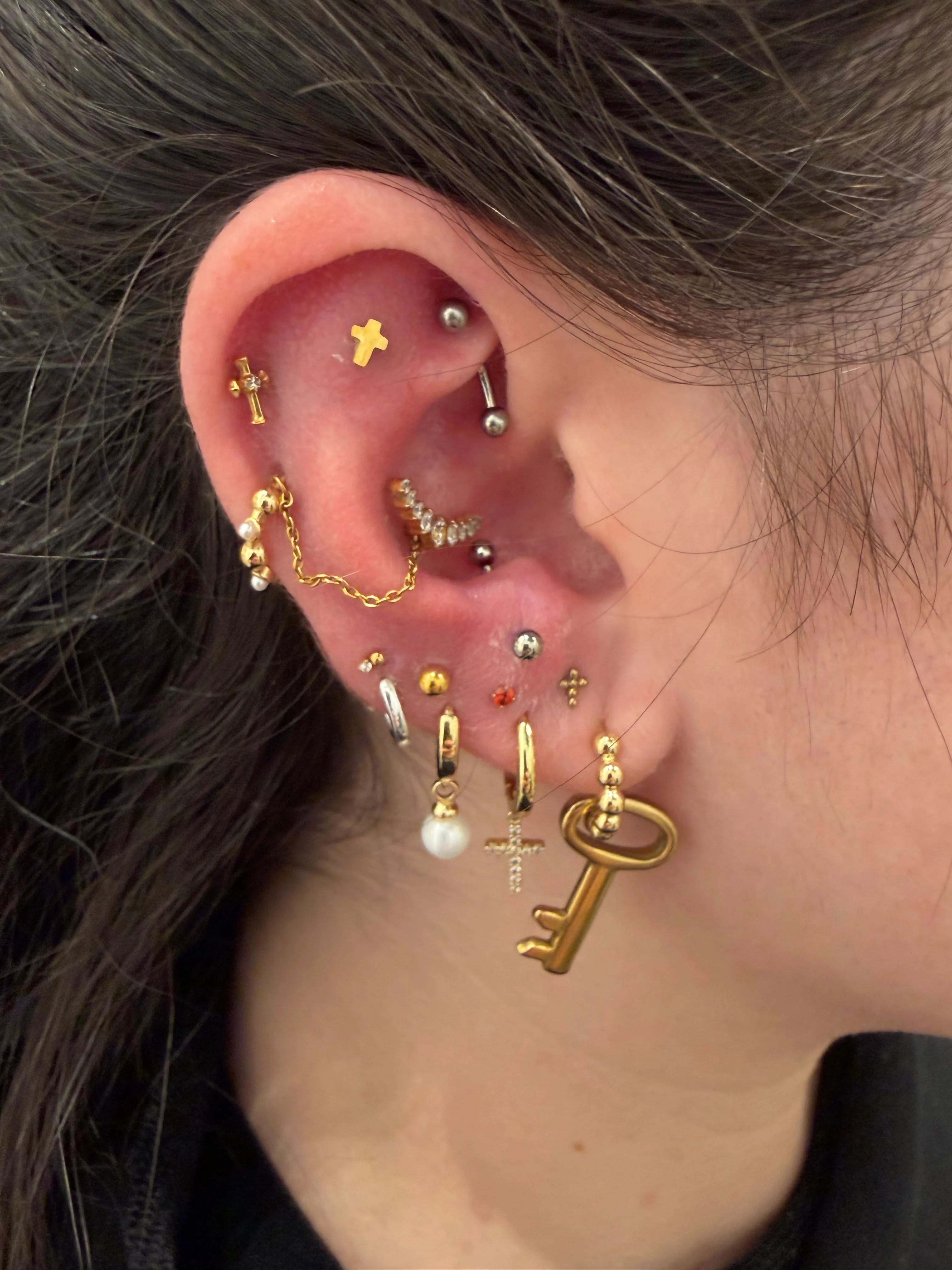
- The Flat: Located on the expansive, smooth area of cartilage in the upper ear, the flat offers the most "real estate" of any cartilage placement, making it the perfect spot for larger, ornate gold clusters or intricate shapes that would be too bulky elsewhere. Because the surface is so level, it allows the jewelry to sit flush against the ear, creating a clean and striking visual.
- The Rook: Positioned along the inner ridge of cartilage above the daith, the rook adds depth and structure to a curated ear. It naturally draws the eye inward and works great with curved barbells, hoops, or small, detailed pieces.
- The Daith: Tucked into the innermost fold of cartilage just above the ear canal, the daith is a bold, centralized feature. It is a popular choice for holding ornate hoops that draw the eye toward the middle of the curation.
The Anchor Points: Conch, Lobe, and Tragus
These areas provide the weight for your design, sitting in the flatter or more prominent spaces of the ear.
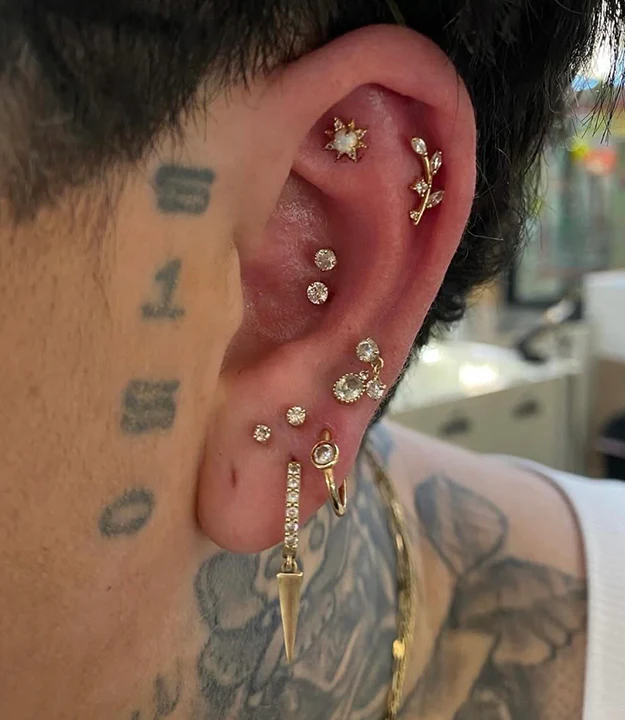
- The Helix: This is a versatile canvas along the rim of the ear. While upper helixes are classics, we are seeing a move toward stacked helixes and lower helixes that sit closer to the lobe. These create a continuous line of jewelry that anchors the outer edge of your curation.
- The Conch: Located in the inner bowl of the ear, the conch provides the visual weight needed to balance out the rest of your curation. Its position makes it naturally protected from snags, and it is incredibly versatile—working just as well with a focused stud as it does with a large ring that hugs the outer edge of the ear.
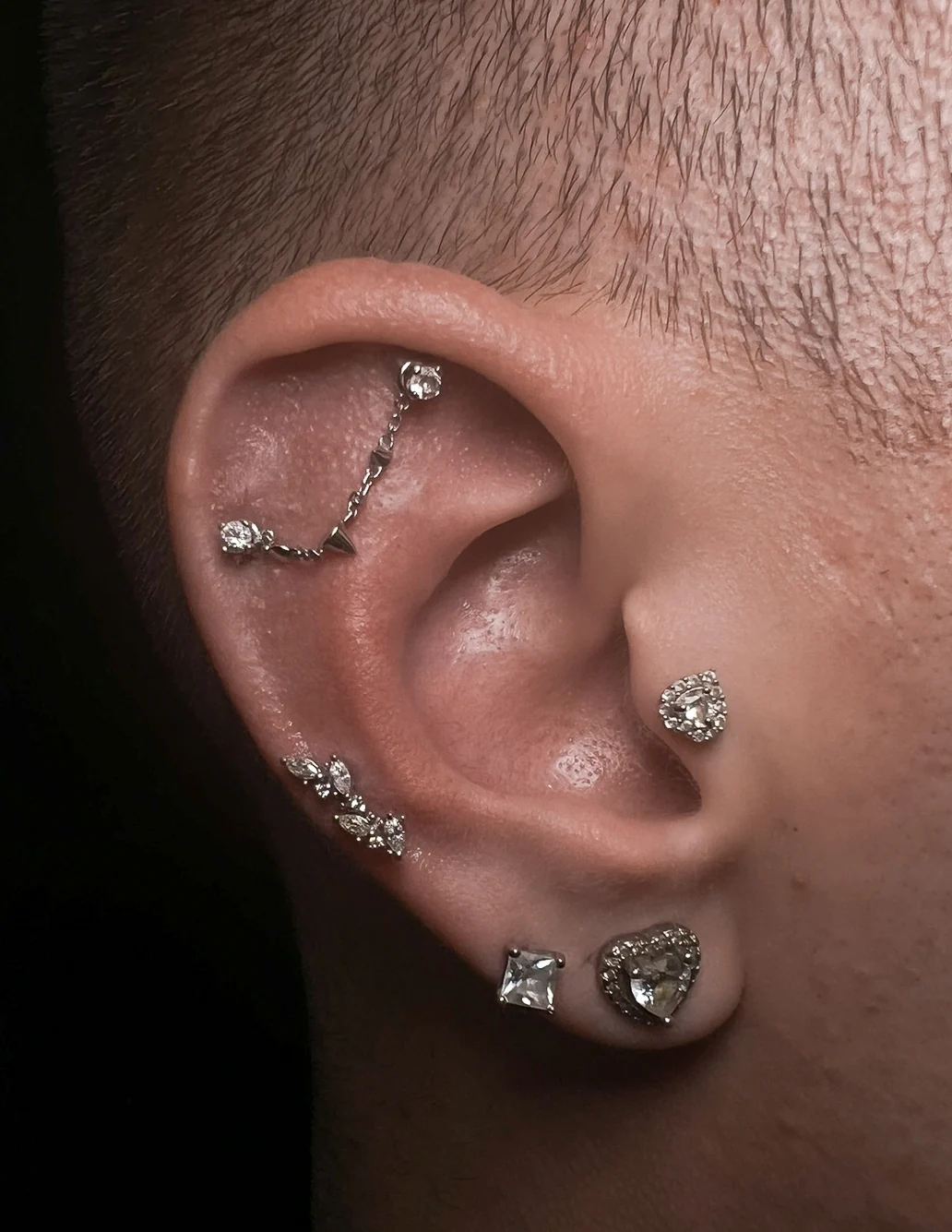
- The Lobe: We’re seeing a lot of constellation lobes lately. Instead of one hole in the center, we’re doing clusters of tiny studs that look like stars across the fleshy part of the ear.
- The Tragus: This piercing sits on the small flap of cartilage partially covering the ear canal. It serves as a subtle edge-piece that rounds out a curation, providing a clean spot for a tiny diamond or a minimalist gold stud.
The Truth About Jewelry (Don't Settle for Cheap)
One of the biggest mistakes people make is choosing jewelry based purely on the price tag. Your body is highly sensitive to what you put inside it, especially while it’s trying to heal a new wound.
Why Quality Matters
While certain types of implant-grade surgical steel are compliant and safe, the vast majority found in mall shops or budget online marketplaces actually contains nickel or other fillers that your body will eventually reject. These lower-grade metals often fail ISO and ASTM standards, leading to pitting—microscopic holes in the metal—that traps bacteria and causes that chronic, itchy irritation nobody wants.
For a smooth heal, we recommend these materials from our jewelry collection:
- Implant-Grade Titanium: This is the gold standard. It’s lightweight, 100% hypoallergenic, and your body won't fight it.
- Solid 14k/18k Gold: We avoid plated or filled options. Solid gold is bio-compatible and stays looking great forever.
- Niobium: A great alternative for people with extreme metal allergies who still want a dark, polished look.
Pro Tip: Start with a flat-back stud. We know you want the hoop immediately, but hoops move around too much and drag bacteria into the piercing. Heal it with a stud first, then swap to the hoop once the tissue is solid.
Why the Studio You Pick Matters
A piercing is a minor procedure that requires a deep respect for your body's biology. Professional piercers spend years studying anatomy and strict cross-contamination protocols so they can perform your piercing safely. At our studios, we keep things clean and professional:
- Consultation: We look at your ear first. Not every ear is shaped for an industrial or a rook, and we’ll tell you honestly if a placement won't work for you.
- The Autoclave: Every piece of gear is sterilized in a medical-grade autoclave.
- Needles Only: We never use piercing guns. Guns are impossible to fully clean and they use blunt force to tear through the skin. We use single-use, hollow needles for a clean, fast, and much less painful experience.
Aftercare: Don't Mess Up Your Investment
Once the jewelry is in, the rest is on you. If you get lazy with piercing aftercare, you’re looking at those annoying piercing bumps or worse, infections.
The LITHA Method (Leave It The Hell Alone)
Your body is already trying to heal. Your only job is to keep it clean and get out of the way.
- Cleanse: Use a sterile saline spray like NeilMed twice a day. Spray it on, let it sit, and pat it dry with a clean paper towel.
- No Touching: Don't twist it. Don't rotate it. Every time you touch the jewelry, you’re breaking the new skin cells your body just made.
- No Soaking: Stay out of pools, lakes, and hot tubs for at least 8 weeks. These are basically bacterial soup for a fresh piercing.
How Long Does it Take?
- Lobes: 6 to 8 weeks.
- Cartilage: 3 to 12 months. Cartilage takes time.
Turning 2026 Piercing Trends Into a Personal Statement
Trends like constellation lobes and stacked helixes give us a great starting point, but the real beauty of ear curation is that it’s personal. A trend might get you into the studio, but high-end metals and professional placement are what keep that look sharp for years to come. Don't just follow the crowd—use these styles as a foundation to build something that fits your specific anatomy and aesthetic.
A curated ear isn't built in a day, but when you respect the healing process and invest in the right hardware, it’s a permanent upgrade to your style that outlasts any passing fad. If you’re ready to move past the inspiration phase and start building your custom look, book a piercing appointment at one of our world-class studios today.
Frequently Asked Questions
Can I get multiple piercings in one session?
Generally, yes. Most professionals recommend a maximum of 3 to 4 piercings at a time. This ensures your body’s immune system isn't overwhelmed, allowing each site to heal effectively without the prolonged swelling that can come from over-taxing your body.
How do I know if my ear is "too small" for a specific style?
This is exactly why the consultation is so important. Everyone’s anatomy is unique—you might have a deep conch but a very narrow helix fold. Your piercer will help you select the best "real estate" to ensure the jewelry sits comfortably and has enough tissue to stay permanent without rejection.
Can I start my curation with hoops?
We almost always recommend starting with a high-quality flat-back stud. Hoops tend to rotate and shift, which can drag bacteria into the healing channel and cause irritation bumps. Once the tissue is fully stable—usually after 6 to 12 months for cartilage—we can swap them out for the hoops you’ve been eyeing.
What happens if I want to add to an old piercing layout?
Curation is often a years-long "ear project." We can work with your existing holes and simply update the jewelry to a more cohesive metal or add new "bridge" piercings to fill gaps and make the overall layout feel like a single, intentional design.
Is it okay to sleep on a new curation?
Pressure from a pillow is the leading cause of migration, where the angle of the piercing actually shifts as it heals. If you’re a side sleeper, we strongly recommend using a travel pillow and placing your ear in the center hole. This keeps the pressure off the new jewelry and ensures your unique style stays perfectly aligned.