
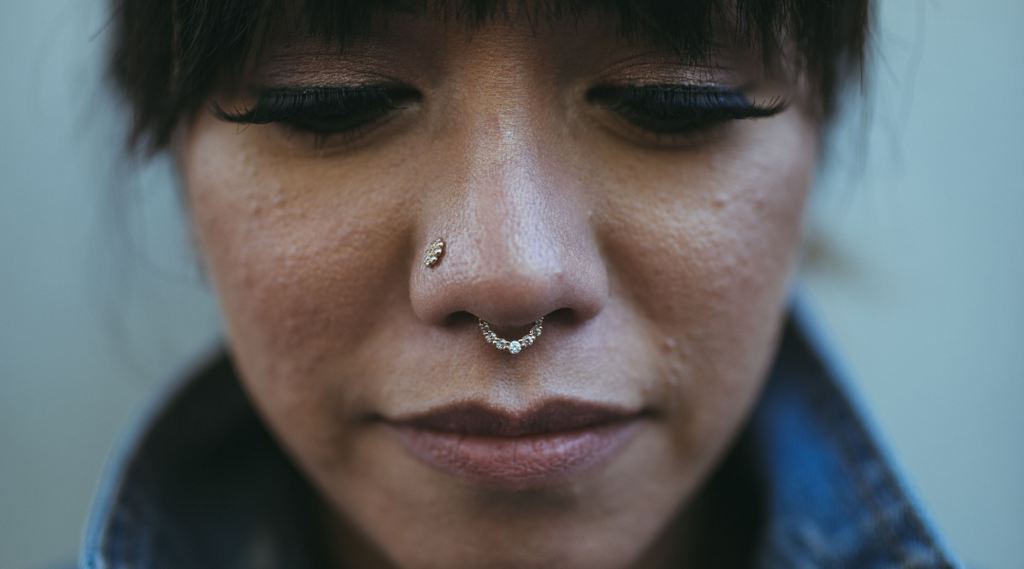
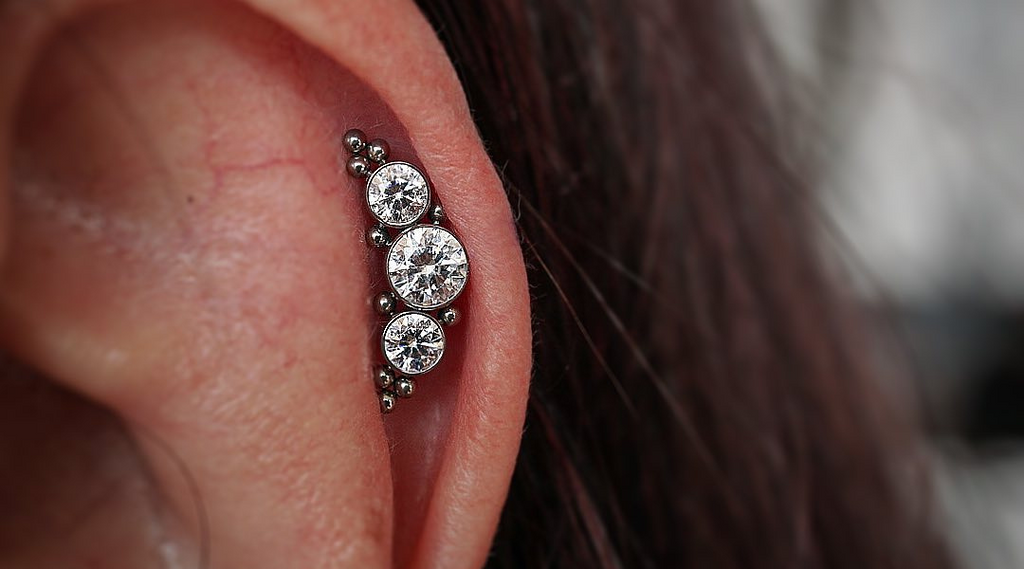


Whether you are finalizing a custom ear curation or adding a sleek new nostril piece, there is nothing quite like catching that first glimpse of fresh gold or titanium in the mirror. But once the needle is put away, the real work shifts to your daily routine.
The environment you step into plays a massive role in how your skin recovers. For clients getting a piercing in New Jersey, managing day-to-day healing looks a little different than it might elsewhere. From humid, salty summers down at the Jersey Shore to freezing Tri-State winters and busy commuter schedules, local lifestyle and climate factors change how your skin behaves.
To help you navigate the process seamlessly, this guide breaks down realistic healing timelines, debunks common aftercare myths, and walks through the exact blueprint you need for proper piercing aftercare and infection prevention.
If you’re ready to bring your next vision to life, we’d love for you to check out the elite talent at our studio by exploring the Club Tattoo New Jersey piercer portfolio. Since 1995, Club Tattoo has been bridging the gap between luxury fashion and body art, pairing world-class artistry with the highest safety standards to ensure your experience is as safe, clean, and comfortable as possible.
What Is the Typical Piercing Healing Time in New Jersey?
One of the biggest misconceptions we hear is that a piercing is completely healed the second the initial swelling goes down and it stops feeling tender. In reality, piercings heal from the outside in. Even if the skin looks perfect on the surface, the delicate internal tissue channel (the tunnel where your jewelry sits) takes quite a bit longer to fully stabilize.
How fast you heal depends on a few things: blood flow to the specific area, the type of tissue involved, and your body’s natural biological clock.
Typical Healing Timelines by Piercing Type
| Piercing Category | Specific Examples | Estimated Full Healing Time |
|---|---|---|
| Oral & Lip | Tongue, Lip, Monroe | 2 to 3 Months |
| Soft Tissue | Earlobe | 6 to 8 Weeks |
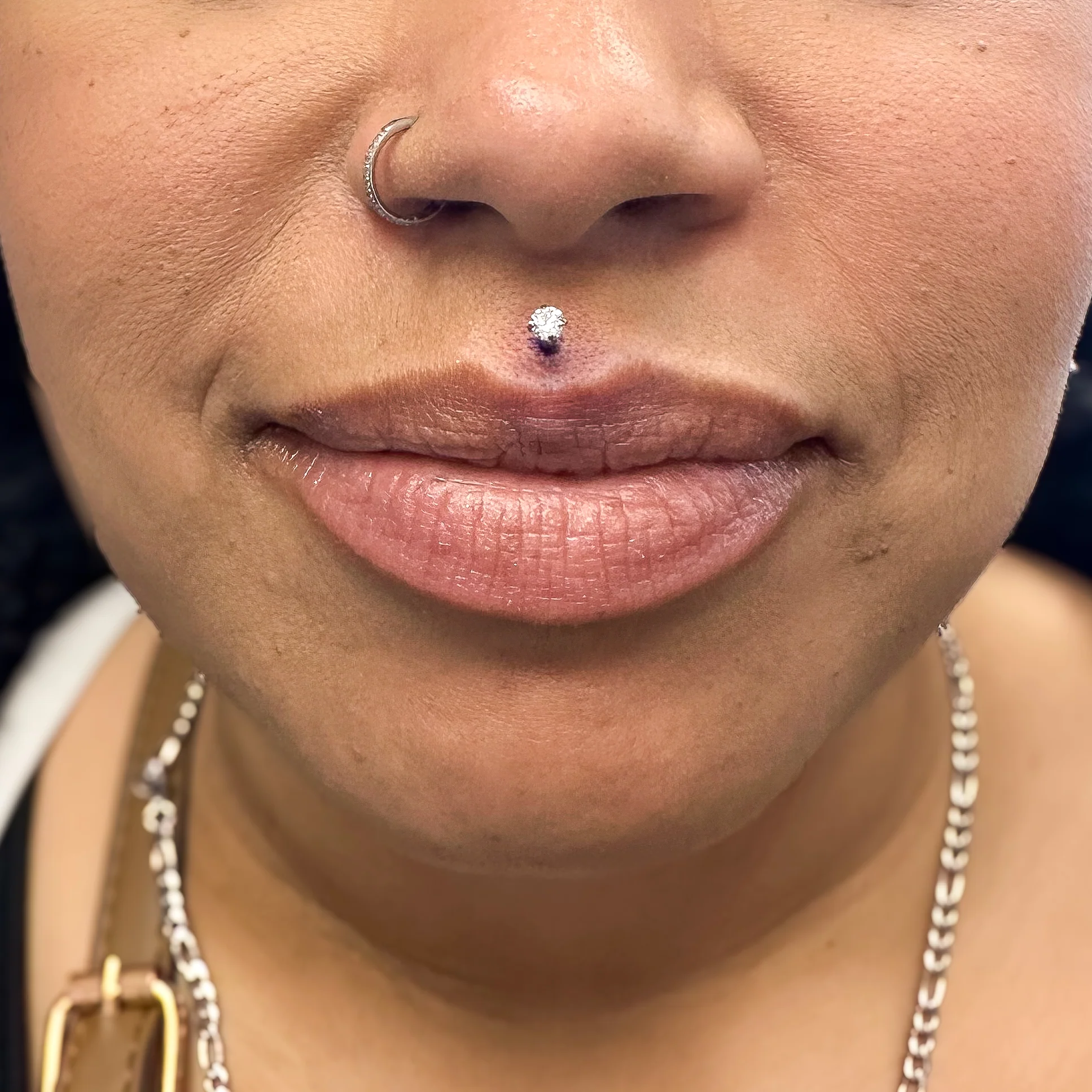
| Nasal Piercings | Nostril, Septum | 2 to 4 Months |
| Complex Cartilage | Helix, Forward Helix, Tragus, Conch, Rook, Daith | 3 to 12 Months |
| Body / Surface | Navel (Belly Button), Nipples | 9 to 12 Months |
Unique Environmental Factors Affecting New Jersey Piercings
While fundamental piercing aftercare tips apply everywhere, living in the Garden State means dealing with seasonal shifts and active lifestyles that can directly impact a fresh wound.
1. Jersey Shore Summers: Humidity, Sweat, & Waves
High summer humidity means more sweat, which can easily trap dirt, cosmetics, and environmental bacteria around your new jewelry. And while ocean water is natural salt water, open beach water and local swimming pools are full of bacteria, chlorine, and contaminants.
The Golden Rule: Keep your piercing completely out of oceans, lakes, pools, and hot tubs for at least 4 to 6 weeks. No exceptions!
2. Bitter Tri-State Winters: Dry Air & Heavy Knits
When winter rolls around, freezing outdoor air mixed with blasting indoor heating completely strips your skin's moisture barrier, making a healing piercing prone to dryness and irritation. On top of that, tight beanies, heavy scarves, and oversized hoodies are notorious for snagging ear and cartilage jewelry. Sudden snags can tear the tissue, causing localized swelling or stubborn piercing bumps (hypertrophic scars).
3. The Commuter Hustle: Friction & Pressure
Whether you’re catching an NJ Transit train or driving down the Parkway, daily habits can accidentally stress a new piercing. Tight waistbands can rub against a fresh navel piercing, heavy backpack straps can irritate a shoulder or surface area, and over-the-ear commuter headphones frequently compress healing cartilage. Constant pressure deprives the tissue of oxygen, which triggers a prolonged healing process.
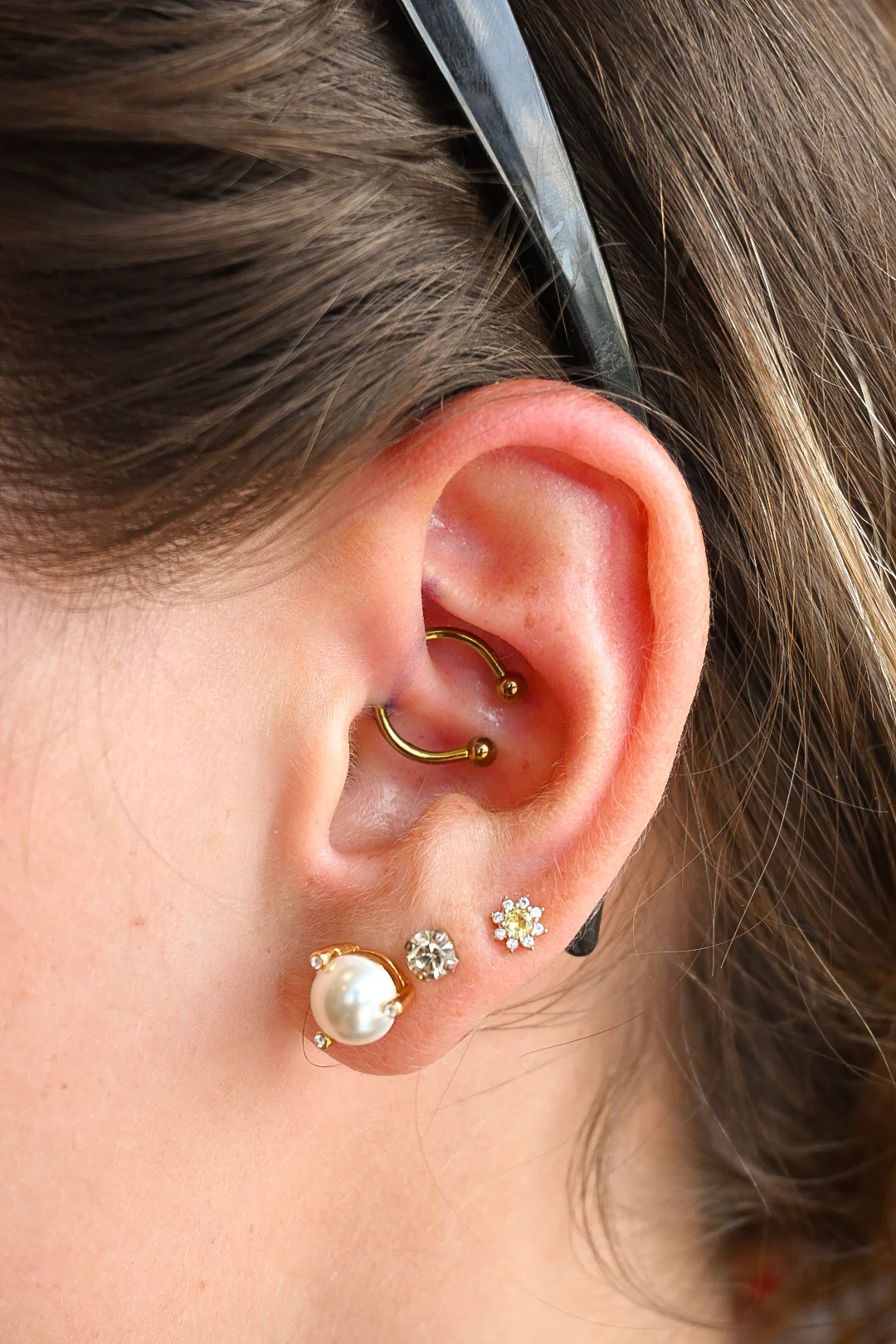
How to Perform Effective Cartilage and Nostril Piercing Aftercare
To get a flawless heal, your daily routine should be gentle and precise. Old-school advice often relied on harsh cleaning methods, but modern clinical standards show that keeping the area sterile and undisturbed is the absolute best approach. For a complete set of specific, detailed instructions on maintaining your fresh body art, check out our official Club Tattoo piercing aftercare guide.
The Simple 5-Step Aftercare Routine
- Wash your hands thoroughly with antibacterial soap before touching or cleaning.
- Gently wash the piercing, jewelry, and surrounding skin with antibacterial soap once a day.
- Generously mist the area with premium sterile aftercare spray 2 to 3 times a day.
- Use a clean cotton swab saturated with the spray to carefully sweep away any softened crust.
- StSchedule a visit with your piercer in 3 to 6 weeks to downsize to your permanent jewelry.
The Gold Standard: Sterile Saline
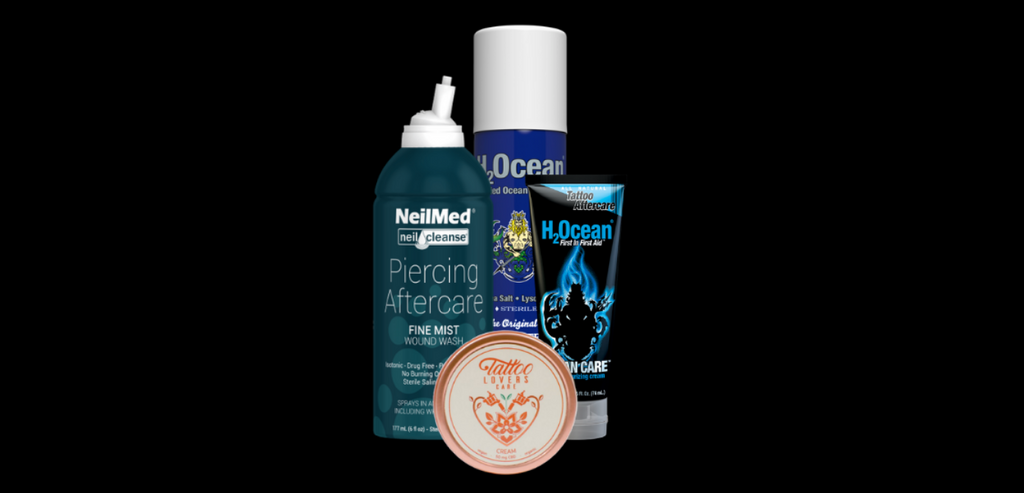
To keep your luxury jewelry looking bright and your skin healthy, stick exclusively to a pure, sterile saline mist. We highly recommend skipping homemade sea salt mixtures. It's almost impossible to get the perfect, sterile ratio at home, and a mix that's even slightly too strong can cause flaky skin and intense irritation.
For an effortless, hands-off clean, we always point clients toward NeilMed Piercing Aftercare Mist. It's specialized mist nozzle functions perfectly even when inverted, making it incredibly simple to spray from any angle without ever needing to touch the wound.
Piercing Aftercare Myths We Need to Bust
Because we hold ourselves to absolute artistic and professional integrity, we want to clear up a few common, outdated pieces of advice that can actually do more harm than good:
-
Myth: Use antibacterial ointments like Neosporin or Bacitracin.
- The Reality: Never put thick ointments or petroleum-based products on a fresh piercing. They completely cut off oxygen to the channel, trapping sweat and moisture inside. This creates a perfect environment for bad bacteria to grow.
-
Myth: You need to twist or rotate the jewelry every day.
- The Reality: Leave the jewelry completely still. Turning or twisting tears the tiny, fragile new skin cells trying to form inside the tunnel. This leads to internal bleeding, drives bacteria deeper into the wound, and causes unnecessary scarring.
-
Myth: Clean it with rubbing alcohol, hydrogen peroxide, or Bactine.
- The Reality: These chemicals are way too aggressive for healing cells. They dry out the skin, destroy healthy new tissue, and significantly drag out your recovery time.
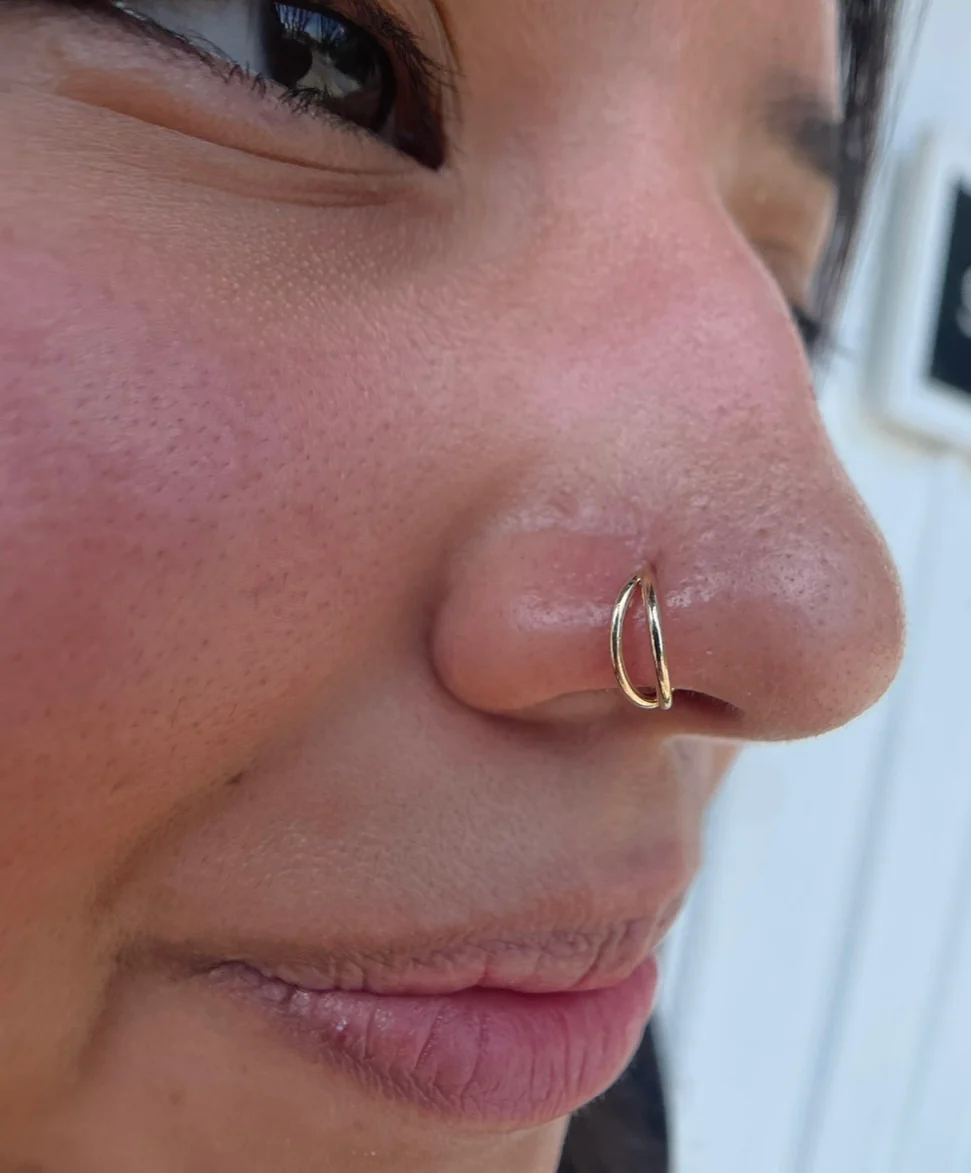
How to Prevent Piercing Infection: Essential Signs to Watch For
An easy healing phase comes down to knowing the difference between normal, everyday healing and actual warning signs of an infection.
Normal Healing vs. Active Infection
| Symptom | Normal Healing (First 1-3 Weeks) | Signs of Possible Infection |
|---|---|---|
| Skin Color | Mild, localized pinkness or redness | Spreading, angry red streaks or deep purple discoloration |
| Swelling | Slight, temporary swelling that goes down daily | Severe, throbbing swelling that feels like it's expanding |
| Temperature | A tiny bit of warmth right after cleaning | The skin feels noticeably hot to the touch, or you have a fever |
| Fluid/Discharge | Clear fluid or pale white/yellow fluid that dries into crust | Thick, foul-smelling dark yellow or deep green pus |
| Pain Level | Minor tenderness if you accidentally bump it | Persistent, sharp, or escalating pain that throbs constantly |
What to Do If Things Seem Off
If you suspect your piercing might be infected, please do not take the jewelry out. If you remove the jewelry, the surface holes can close up quickly, trapping the deep infection inside the tissue and potentially leading to an abscess.
Instead, leave the jewelry exactly where it is and reach out to an expert at a professional studio or visit a certified healthcare provider right away so they can take a look and guide you safely through the next steps.
New Jersey Piercing Regulations & Studio Certifications
The state of New Jersey takes body modification seriously, maintaining strict health codes regarding studio cleanliness, medical-grade sterilization, autoclave logging, and biohazard control.
The Club Tattoo Safety & Cleanliness Checklist
✓ 100% Sterile, Single-Use Piercing Needles
✓ Autoclave-Sterilized, Internally Threaded Jewelry
✓ Members of the Association of Professional Piercers
✓ Proprietary Patented Tool & Jewelry Designs
When you're choosing where to get your next piece of body art, always make sure the studio holds up-to-date local certifications. At Club Tattoo, we aim to exceed industry standards. Our piercers are proud members of the Association of Professional Piercers (APP), meaning your session will be handled with flawless hygiene protocols and the absolute finest implant-grade materials—like solid gold and biocompatible titanium.
Ready to add a sophisticated, beautifully executed new piece to your collection? Book your next luxury experience by exploring our world-class Club Tattoo body piercing options.
Frequently Asked Questions (FAQ)
How soon after getting a piercing in New Jersey can I go to the Jersey Shore or swim in a pool?
You should wait a minimum of 4 to 6 weeks before submerging a fresh piercing in any body of water, including the ocean, local lakes, public pools, or hot tubs. While natural saltwater can be beneficial in a sterile, controlled environment, open coastal waters and shared pools carry unpredictable bacteria, chlorine, and organic debris that can easily trigger an aggressive infection in an open wound channel.
What is the purpose of downsize appointments, and when should I schedule one?
A downsize appointment is a crucial step where your piercer swaps the initial, longer post used to accommodate swelling for a shorter, flush-fitting post. At Club Tattoo, we recommend scheduling this visit within 3 to 6 weeks. Leaving the longer initial jewelry in for too long increases the risk of it snagging on clothing or shifting dynamically, which can permanently alter the angle of the piercing or cause painful piercing bumps.
Why do luxury studios prioritize implant-grade titanium and solid gold over standard surgical steel?
Implant-grade titanium (ASTM F-136) and biocompatible 14kt or 18kt solid gold contain virtually no trace amounts of nickel, which is the leading cause of allergic contact dermatitis and localized piercing irritation. Standard surgical steel often contains unrefined nickel alloys that leach into an open wound over time, causing chronic swelling, redness, and prolonged healing delays that are easily avoided with premium materials.
The information provided in this article is for educational purposes only and should not be taken as professional medical advice. While proper care supports an optimal recovery path, individual biology and skin responses vary. If you suspect an infection or experience severe symptoms, consult a licensed healthcare professional immediately.

