Walking into a studio for the first time comes with a particular kind of nervous energy. It is usually the good kind, a mix of anticipation and excitement, but nerves are still nerves when permanent ink is involved. Understanding how professional tattoo services work, from that initial stencil placement to the final protective wrap, takes most of the edge off before you ever step through the door.
Here's what you need to know to walk into the studio feeling ready, relaxed, and fully in control of your experience.
What Happens During Your First Tattoo Appointment?
During a first tattoo appointment, you'll talk through final sizing with your artist, approve the stencil placement, sit for the tattoo itself, and leave with healing instructions. Plan to arrive 15 minutes early with a valid photo ID for the consent paperwork, and expect to watch your artist build a sterile workstation with single-use needles before anything starts. At a shop offering full professional tattoo services like Club Tattoo, that time is treated as a creative process you're part of, not a transaction to get through.
The Club Tattoo Booking Process
Most custom work runs by appointment, especially for larger or more detailed concepts. The Club Tattoo tattoo booking process starts with an inquiry: you send reference images, target placement, and a rough size, and our team matches you with an available artist who suits the style.
Once you are ready to lock in your date, booking your first tattoo appointment with Club Tattoo requires a deposit to reserve your slot. Deposits cover the time an artist spends drafting your design before you arrive, which is why they are non-refundable, though the full amount comes straight off your final cost.
Cancellation windows, rescheduling grace periods, and no-show terms differ from shop to shop. Reading through our studio deposit and booking policies ahead of time keeps everyone on the same page from day one.
Choosing Your Tattoo Design and Artist
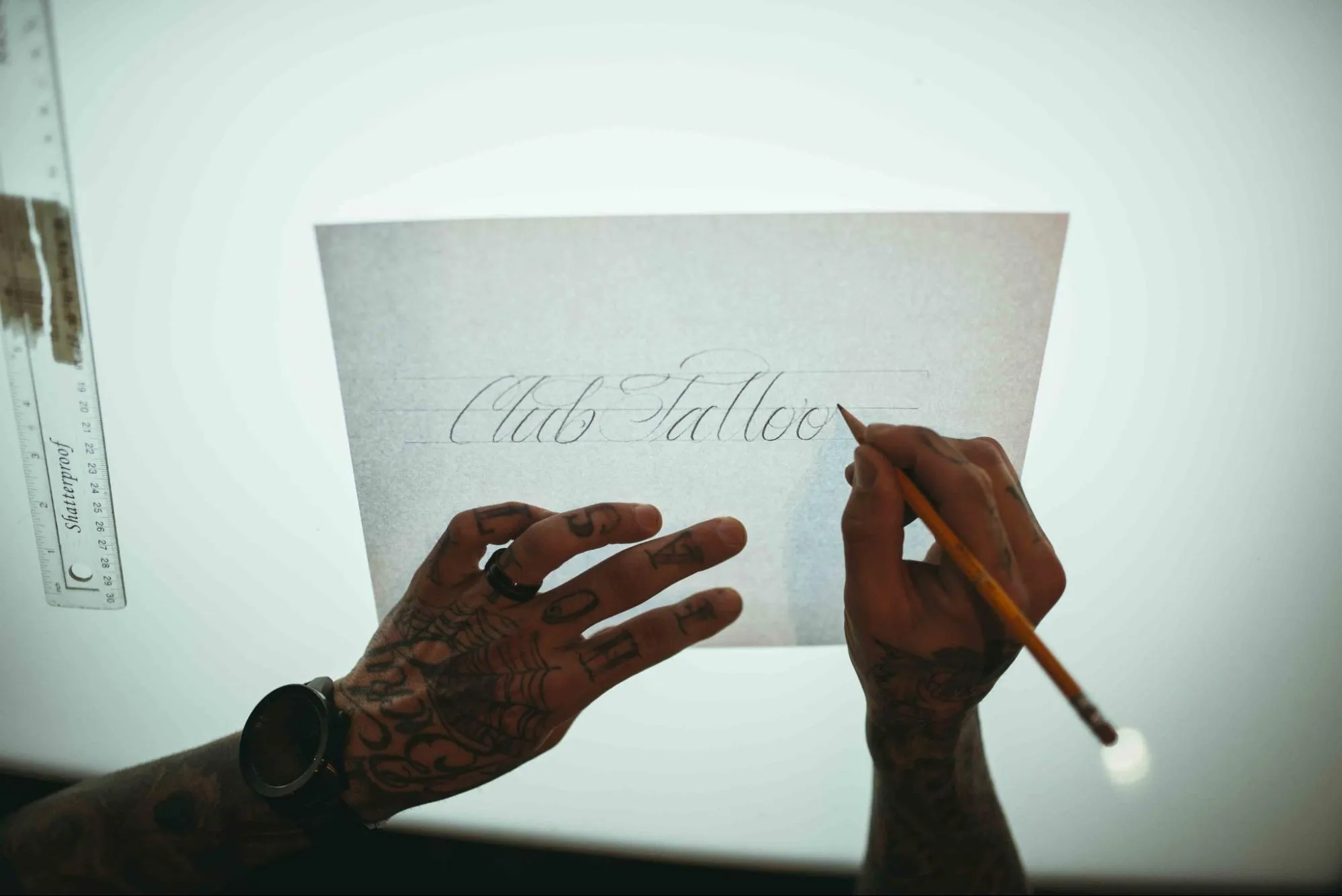
Rushing the design phase is the most reliable way to end up with a piece you aren't fully in love with. Every artist has their own hand. Someone who does beautiful bold traditional linework may not be the right fit for delicate botanical fine line, and a good shop will tell you that rather than take the booking anyway.
Before you commit, spend some time with the work coming out of each of our locations, including:
-
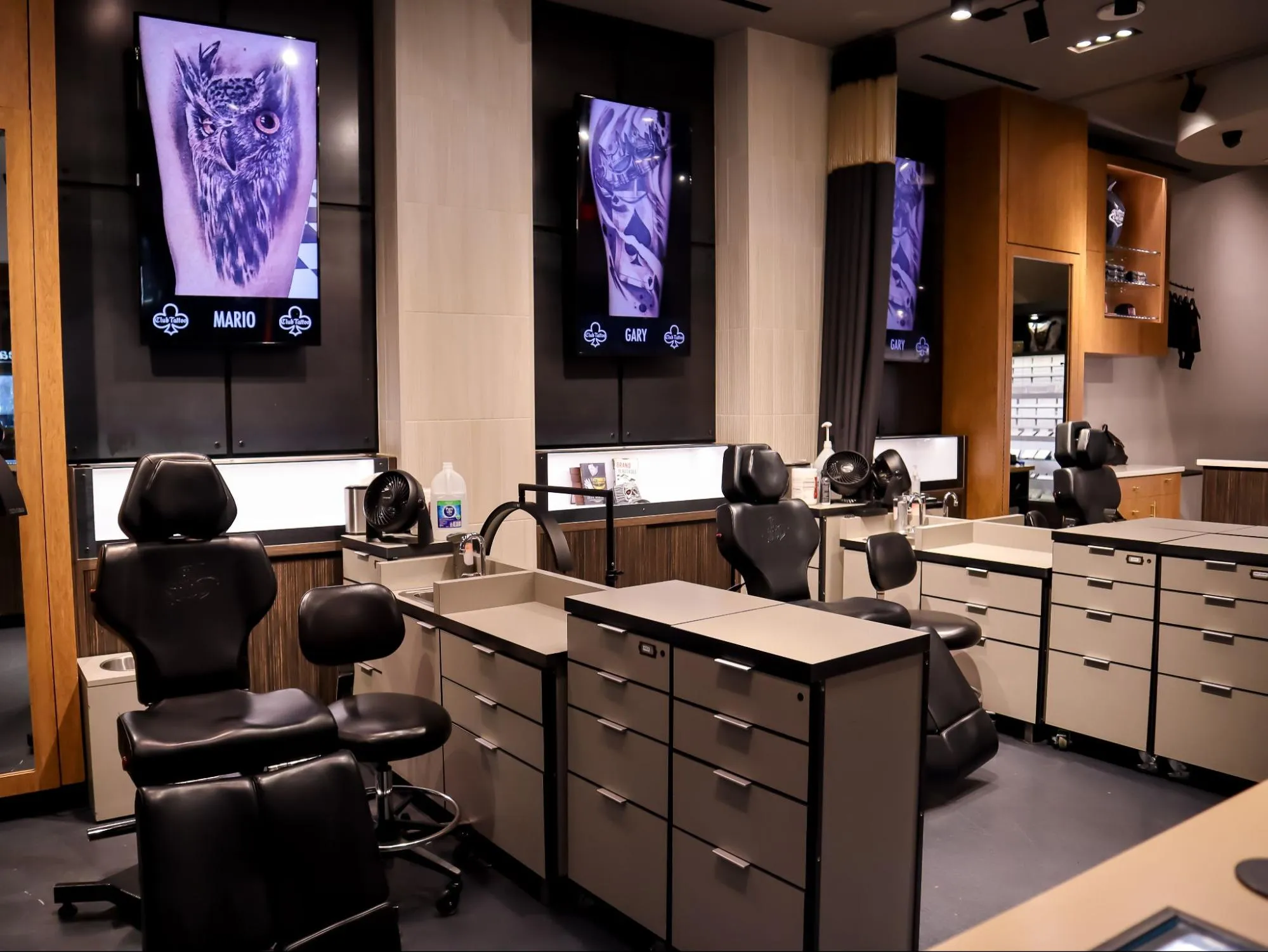
Southwest Talent: Check out the Arizona tattoo artist portfolios to browse custom designs from our resident artists.
-
East Coast Style: Explore the NYC studio portfolios to see the full range of work from our East Coast team.
-
Southern Craft: Browse the Texas tattoo artist galleries to view custom work from our Houston studio.
Our artists will tell you honestly when a reference won't age well or won't translate cleanly to skin. Trust that guidance. Creating a custom tattoo design involves a lot more than printing out a photo you liked, and the back-and-forth you do now with your Club Tattoo artist is the best insurance there is for avoiding tattoo regret a few years down the line.
First Tattoo Myths vs. Facts to Know
Tattoo culture carries plenty of urban legends, especially for first-timers relying on advice from social media or well-meaning but misguided friends. Here is the truth behind the most common misconceptions:
-
Myth: A healed tattoo looks exactly like it did on day one. Ink settles into the skin as it heals, so lines soften a little and colors mellow over the following weeks. This is the normal process, not a sign that something went wrong.
-
Myth: Bigger tattoos hurt more. Placement matters far more than size. A large piece on the outer thigh can sit easier than a small one on the ribs.
-
Myth: You have to power through with no breaks. Breaks are completely normal, especially on anything running over an hour. Ask for one whenever you need it.
-
Myth: Small, simple tattoos are easy for the artist. Fine detail and tight linework ask more of an artist's hand than plenty of bold, larger pieces do; there's far less room for ink to spread and still read the way it should.
-
Myth: A couple of drinks takes the edge off. Alcohol thins your blood, which means more bleeding, lines at risk of blowing out, and a longer sit. Most shops, ours included, will turn away anyone who shows up intoxicated.
The Week Before: Essential Pre-Session Prep
Preparing for a tattoo comes down to basic physiology. Your skin is an organ, and how it takes ink depends a lot on how hydrated and rested you are when you walk in.
|
24–48 Hours Before |
Morning Of |
|---|---|
|
Hydrate properly: drink water consistently to keep skin pliable |
Eat a solid meal: complex carbs and protein to steady your blood sugar |
|
Skip the alcohol: thinned blood means more bleeding in the chair |
Go easy on caffeine: less espresso means fewer jitters and a calmer sit |
|
Sleep on it: seven to eight hours does more for pain tolerance than anything else |
Dress loose: dark, comfortable clothes with easy access to the placement |
Hydration, Sleep, and Blood Sugar
Start drinking more water two or three days out. Hydrated skin takes ink smoothly and bounces back faster afterward. The night before, get a full eight hours if you can.
Your blood sugar has a direct effect on how well you handle the sit. Tattooing sets off a natural adrenaline release, and a mid-session drop in blood sugar can leave you feeling lightheaded, nauseous, or suddenly cold.
-
Eat a real meal: something substantial with complex carbs and protein, within a few hours of your appointment.
-
Watch the caffeine: loading up on coffee before you walk in is a common misstep. It raises your heart rate, thins the blood slightly, and makes sitting still noticeably harder.
-
Prep the skin: moisturize the area lightly for a few days beforehand, then skip lotion entirely on the morning of so the stencil transfers cleanly.
Tattoo Day Timeline
|
Timeframe |
Session Stage |
What to Expect at Club Tattoo |
|---|---|---|
|
20 mins prior |
Arrival and intake |
ID check, age verification, and health history paperwork |
|
15 mins prior |
Stencil alignment |
The area is shaved with a single-use razor, sanitized, and the stencil goes on |
|
Session start |
Station prep |
Your artist wraps the equipment in barriers and opens sealed, single-use needle cartridges |
|
First 30 mins |
Linework pass |
The outline goes in. Your body adapts to the scratching sensation as endorphins kick in |
|
Mid-session |
Shading and color |
Shader groupings build depth and gradients, with stretch breaks whenever you want them |
|
Final 10 mins |
Clean and wrap |
An antiseptic wash, a dermal wrap or sterile bandage, and a walkthrough of your aftercare |
Inside the Tattoo Studio: Hygiene and Technique
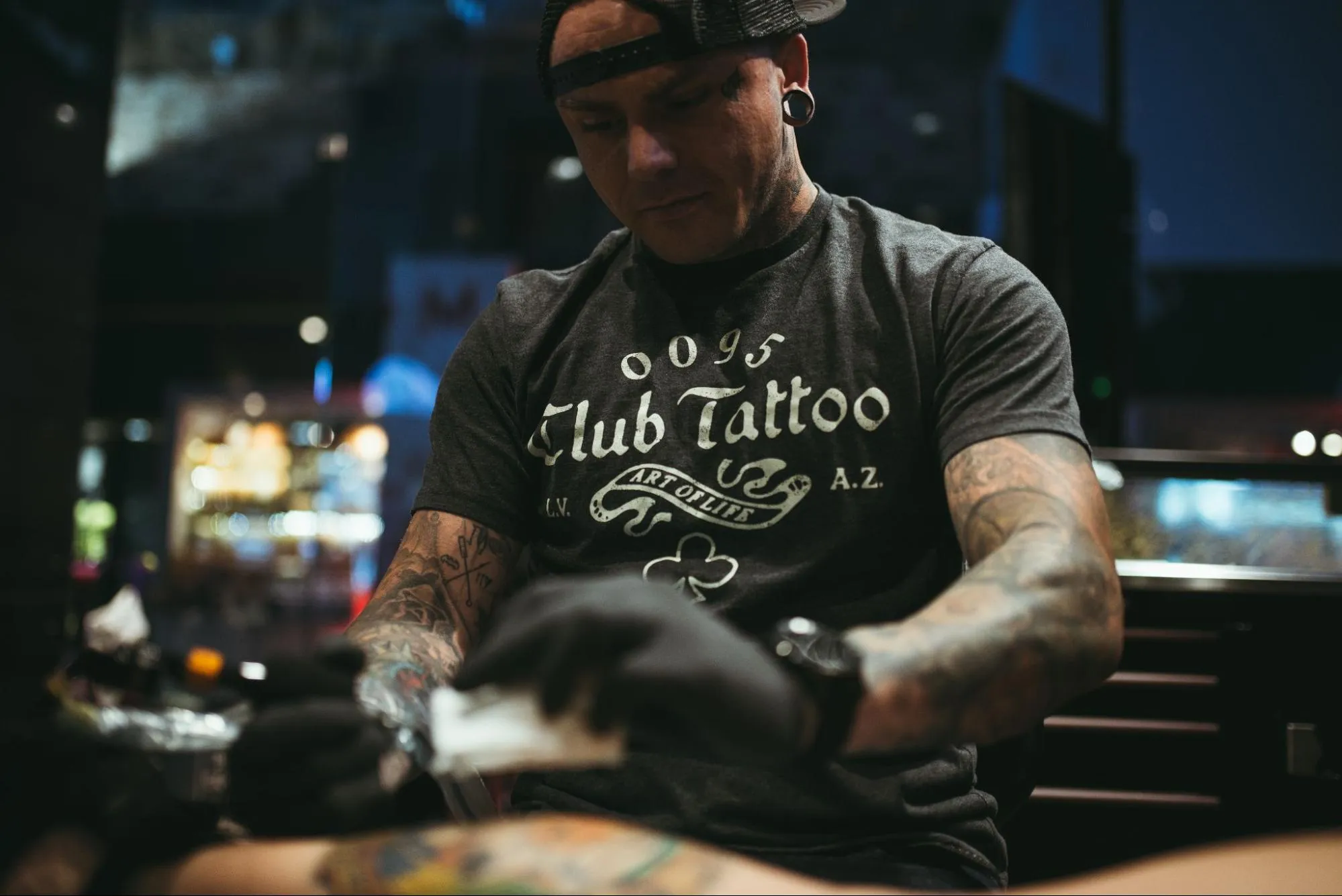
Hygiene and bloodborne pathogens protocols aren't something we adjust for a busy day. Every surface in the station (armrest, machine, power supply, clip cord) gets wrapped in single-use plastic barriers that come off and get disinfected between clients. If you want to know why something is done a certain way, ask. Any artist worth their chair will be glad to walk you through it.
Stencil Placement and Muscle Dynamics
Because muscle tension changes how skin sits, placing a stencil well takes real spatial awareness. Your artist will usually position the stencil while you're standing naturally. Flex, twist, or slouch while it's being pressed on and the finished piece will look off the moment you settle back into a normal posture.
If you want the position moved, say so before any ink goes in. Shifting a stencil takes seconds, and we want you to be 100% happy with the results.
Linework vs. Shading: How Needle Choice Changes the Work
You will likely see your artist swap tools during your sit. Each needle grouping shapes your artwork while creating a distinct sensation on your skin. Fine-line work uses tight round liners that feel like a steady scratch, while bold traditional lines call for larger groupings that pack pigment in a single pass. For shading or color, flat or curved magnums sweep tone across broader areas with a warmer, duller burn. Knowing what tool is at work keeps surprises off the table as your piece comes together.
Managing Tattoo Pain and the Adrenaline Crash
Placement dictates discomfort far more than size. Bony or high-nerve areas—like the ribs, feet, or spine—come with a sharper sting, while fleshier spots like the outer thigh or forearm are much easier to sit through. Ten minutes in, your body releases endorphins that take the initial edge off.
What catches first-timers off guard is the post-session crash, often called the "tattoo flu." As stress hormones drop, your immune system kicks in, leaving you feeling tired, chilly, or achy. Keep water and a sweet snack in your bag to eat as soon as you stand up, then take it easy for the evening.
Immediate Aftercare Starts in the Chair
How your tattoo looks for the rest of your life depends heavily on what you do in the first two weeks. Your Club Tattoo artist will clean the fresh piece and seal it under a protective barrier or a breathable, medical-grade dermal wrap before you leave.
Once you're caring for it at home:
-
Follow the protocol: stick closely to the essential tattoo aftercare instructions your artist gives you.
-
Wash gently: use unscented mild liquid soap and your fingertips, never a washcloth.
-
Moisturize lightly: a paper-thin layer of the recommended balm or a fragrance-free lotion, once the skin starts to feel dry or tight.
-
Stay out of the water: no hot tubs, pools, lakes, or baths for at least two weeks.
Step Into the Studio with Confidence
When you step into a studio like Club Tattoo, you are working with pros who put your well-being and artistic vision first. Trust your preparation, rely on your artist's expertise, and enjoy watching your custom piece come to life.
Frequently Asked Questions
Does getting a tattoo hurt a lot for a first-timer?
It's manageable, and it depends heavily on where you're getting it. Most clients describe a steady, warm scratch. Fleshier spots like the outer arm or thigh make for an easier first sit.
Do I need to pay a deposit before my appointment?
Yes. Club Tattoo, like most custom shops, takes a non-refundable deposit to hold your calendar time and cover the design prep your artist does beforehand. It comes off your total on the day.
Should I eat before getting a tattoo?
Yes. A substantial meal with protein and carbohydrates within two hours of your appointment steadies your blood sugar, helps you last through a longer sit, and keeps dizziness off the table.
Is it customary to tip my tattoo artist?
Tipping 15% to 20% is standard for good work, solid safety practice, and an artist who communicated well throughout.