A tattoo is one of the only decisions you make at twenty-five that your sixty-year-old self has to live with, literally, on your skin. Day-one photos look brilliant, but skin isn't paper. It stretches, sheds, and thins over time, changing how pigment settles beneath the surface.
So how do you pick a tattoo you'll love for life? It starts with understanding what actually happens to ink under your skin over time, so whatever style you land on, nothing about it surprises you in twenty years.
Which Tattoo Styles Hold Up Best Over Time?
The most durable tattoo styles that age well rely on high-contrast foundations, thick black linework, and saturated shading. American Traditional, Neo-Traditional, and heavy Blackwork hold up best, structurally speaking. Black carbon pigment is the most stable ink there is, and thick black linework keeps a design's overall shape legible even as skin elasticity changes and any interior color softens naturally over the decades.
The Biology of Aging Ink: What Happens Under Your Skin?
When a tattoo needle punctures the skin, it deposits pigment into the dermis, the stable layer of connective tissue beneath the epidermis. Your immune system immediately responds to the foreign intruder: white blood cells (macrophages) swarm the area and carry away the ink droplets.
- Black ink stability: Carbon-based black ink holds up best because its larger particles are harder for immune cells to clear out and UV rays to break down. It still shifts a little as skin changes over the decades, just far more slowly and predictably than color.
- Color pigment breakdown: As aging skin thins and loses density, lighter colors lose their vibrancy much faster, a process driven rapidly by UV light breaking down their simpler chemical compounds.
- Loss of skin elasticity: When dermal collagen breaks down over time, the skin’s underlying support structure slackens. Without that taut foundation holding the pigment stationary, sharp lines of your tattoo naturally soften and expand outward.
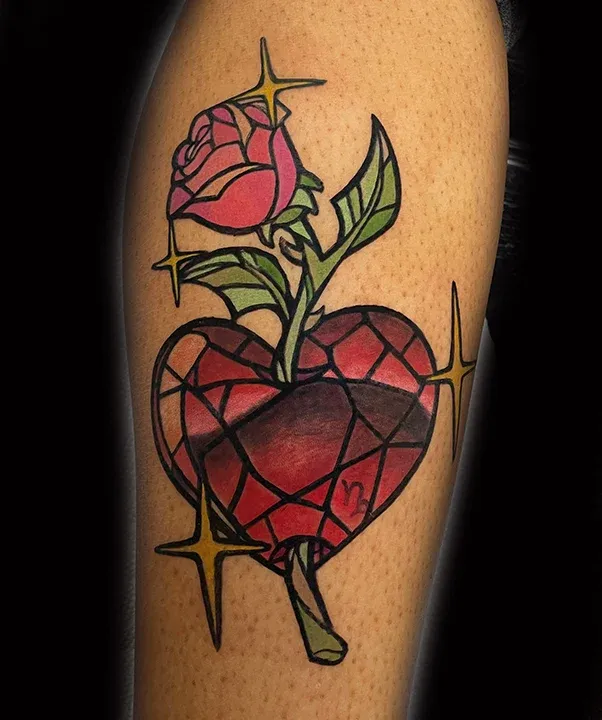
Comparing Popular Tattoo Styles for Longevity
Every visual approach reacts to time differently. If you're in the middle of choosing your first tattoo style, weighing how tattoos age over time across techniques is the surest way to end up with art that stays legible for life.
American Traditional: The Undisputed Standard
Veteran tattooers have a saying: "Bold will hold." Early tattooers were limited by simple gear and basic pigments, but those technical constraints naturally birthed a style that stands up to time better than almost anything else.
- Thick black outlines: Heavy lines act as a strong visual boundary. As the ink settles, the black lines hold their shape and keep the design readable.
- Deliberate negative space: Traditional flash leaves real gaps of bare skin between black and color instead of filling every inch of the design. Artists plan for that breathing room on purpose, and it's part of what keeps the piece readable from thirty feet away, thirty years later.
Neo-Traditional: Modern Artistry Meets Structural Integrity
Want complex shading and a wider palette without giving up durability? Neo-Traditional pulls it off, updating the classic rulebook by pairing variable line weights with rich, illustrative shading.
- Line weight variation: Artists set thick outer anchors against finer internal accents, so the design stays legible even if the finer details soften a bit with age.
- Rich saturation: Neo-Traditional favors deep, dense jewel tones — emerald, plum, gold — that hold their richness far longer than lighter, more diluted colors.
Realism & Black and Grey: Contrast Instead of Outlines
Neither realism nor black and grey leans on hard black outlines the way traditional styles do. Depth comes from tonal gradients and contrast instead, such as shadow sitting next to bare skin or dark pigment against light.
- Realism's aging risk: Tonal detail packed too tight is the first thing to blur. A portrait's fine shading needs room to shift without turning into a smudge.
- Black and grey's aging risk: Built entirely on mid-tone greys, it flattens out over time. It needs deep black shadows sitting right next to bare skin to hold its depth.
- Proportion and scale: High-detail work of either kind needs room to age. A lion portrait spread across a broad forearm stays legible decades longer than the same lion squeezed onto an ankle.
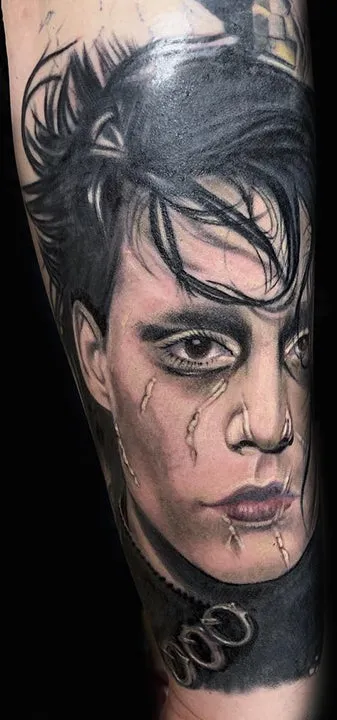
Fine Line & Micro-Realism: Delicate Artistry With a Trade-Off
Fine-line script, single-needle florals, and micro-realism show up everywhere on social feeds these days. Fresh off the needle, they're super crisp, but a few years in, fine line tattoos start to look different from bolder styles. That's not a reason to skip them, but it's something worth knowing before you book.
- Without black borders: Soft gradients with no dark framing tend to blend into each other over the years, gradually settling into one uniform tone.
- Depth is everything: Because there are no thick outlines to mask mistakes, going too shallow causes delicate lines to fall out as skin sheds, while going too deep drives ink into fat cells, turning sharp lines into a blurred smear, essentially defeating the purpose of a fine-line tattoo.
Style Longevity Comparison
| Tattoo Style | Structural Anchor | Fading Risk Factor | 20+ Year Readability | Recommended Scale |
|---|---|---|---|---|
| American Traditional | Heavy black outlines & solid fills | Minimal; lighter colors may dull | Exceptional | Medium to large |
| Neo-Traditional | Black outlines & deep shading | Low; pale accent tones fade first | High | Medium to large |
| Blackwork / Tribal | High-density black saturation | Very low; minor edge softening | Exceptional | Any size |
| Black & Grey Realism | Deep shadow contrast & value hierarchy | Moderate if contrast runs too light | Moderate to high | Large (sleeves, back, thigh) |
| Fine Line / Micro | Subtle single-needle linework | High; lines blur or break up | Low to moderate | Small to medium |
| Watercolor | Soft color washes, often no outlines | High; edges lose definition fast | Low | Medium to large |
Tattoo Placement: How Body Mechanics Affect Your Ink
Style is only half the equation. Placement matters just as much, because skin texture and elasticity vary wildly from one body zone to the next.
Stable Canvas Zones
Thicker skin, less movement, and lower daily sun exposure give ink the best possible conditions.
- Upper outer arms and shoulders: Firm, smooth skin that takes saturation evenly.
- Thighs and calves: Excellent for large illustrative work, with far less clothing friction than joint areas see.
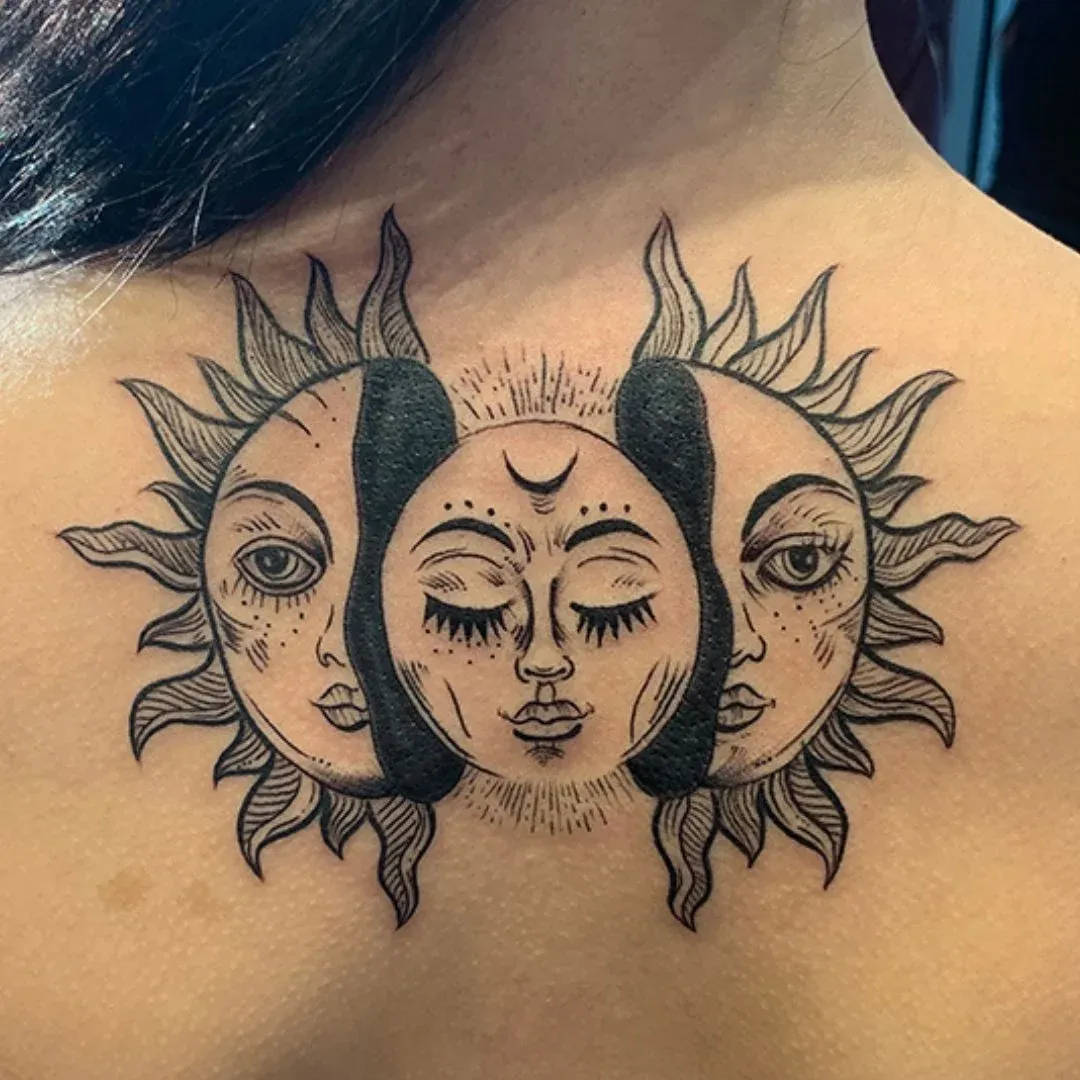
- Back and shoulder blades: A broad plane that resists visual distortion even as weight shifts over the years.
High-Motion & High-Friction Zones
Picking the best tattoo styles for aging also means recognizing which placements naturally hold ink less reliably.
- Hands, fingers, and palms: Skin here sheds faster than almost anywhere on the body. Constant washing, bending, and friction cause fine detail on fingers to blur or drop out early.
- Feet and ankles: Shoe friction plus constant joint motion breaks down surface pigment quickly during healing.
- Elbows and knees: Joint skin stretches, folds, and thickens, which makes even ink depth difficult on intricate designs.
Curious how settled ink actually looks across different placements? Our Las Vegas artist portfolios show healed work across a range of body areas.
Tattoo Scale: Why Bigger Usually Ages Better
Cramming too much detail into a small space is one of the fastest ways to guarantee a tattoo loses definition over time. As ink naturally spreads beneath the skin over the decades, tiny gaps between thin lines can gradually close up. A seasoned artist calculates this inevitable ink migration before the needle ever touches skin. If your artist suggests making a piece larger or paring back intricate details, they aren't shooting down your idea but simply trying to ensure it looks good 20 years from now.
Aftercare: Protecting Your Ink for the Long Haul
The artist places the pigment. Your body decides how much of it stays. Healing habits and daily care matter enormously for keeping a tattoo bright decades down the line.
The First 14 Days
A fresh tattoo is an open dermal wound. Scabbing, infection, or rough abrasion during early healing pulls pigment straight back out.
- Clean gently. Fragrance-free mild antibacterial soap and warm water. No scrubbing.
- Moisturize lightly. A thin layer of ointment or specialized lotion. Overdoing it smothers the skin and can lift ink from the healing site.
- Leave the flakes alone. Let peeling skin drop off on its own instead of pulling pigment that hasn't settled.
For the full step-by-step timeline, follow our official tattoo aftercare guidelines.
The Lifetime Habit: Sun Protection
UV radiation is the single biggest threat to settled ink. Sunlight breaks pigment structures down beneath the skin, and your lymphatic system quietly hauls the fragments away over time. Once healing finishes (usually three to four weeks), apply broad-spectrum SPF 30+ any time the piece sees direct sun. That one habit preserves deep blacks and saturated color better than any touch-up ever will.

Check Out Different Tattoo Styles Across Our Studios
Theory is one thing, but seeing real ink on real skin is another. Explore the resident artists and style specialties across our locations:
- Arizona: Check out our Arizona tattoo artist portfolios to see custom concepts and expert execution from our local team.
- Nevada: Browse our Las Vegas tattoo artist portfolios to view work from our flagship studio artists.
- New Jersey: Take a look at our New Jersey tattoo artist portfolios to explore portfolios from our East Coast team.
- Texas: Explore our Texas tattoo artist portfolios to view work from our Lone Star State artists.
Ready to Design Ink Built to Last?
Day-one photos look great, but the real test of a tattoo is how you feel about it decades down the road when you look in the mirror. Whether you're set on classic American Traditional, layered Neo-Traditional, or smooth Black and Grey, partnering with a specialist ensures your concept is built for the long haul.
Explore Club Tattoos' world-class tattoo services and book a tattoo consultation with an artist near you to start building your piece.
Frequently Asked Questions
Which tattoo styles age most gracefully over 20+ years?
American Traditional, Neo-Traditional, and heavy Blackwork. Thick black outlines, strong contrast, and saturated fills give these styles a visual structure that holds as skin changes.
Can fine-line tattoos be touched up to look fresh again?
Yes. A touch-up can re-establish faint lines and restore lost contrast. Because ink spreads a little with every pass, your artist may adjust line weight slightly to keep the piece looking sharp rather than heavy.
Do watercolor tattoos fade faster than other styles?
Often, yes. Watercolor pieces usually skip black outlines and structural contrast, so pastel washes break down faster in sunlight. Asking your artist to frame those washes with a black or dark grey outline helps a lot.
How do I know if my design is too small for the detail I want?
Step five feet back from your reference drawing. If the details blur together at that distance, the design is too small for skin. Your artist can adjust the scale during your consultation so it stays readable for the long term.