The Meaning Behind Traditional Tattoos: A Guide to American Traditional Symbolism
Long before tattoos were viewed as modern fine art, they were a working-class dialect written in black ink and primary colors. Born in the bustling port shops of the early 20th century, American Traditional tattooing gave sailors, dockworkers, and servicemen a permanent way to mark their journeys, honor loved ones, and wear their values on their sleeves. Decades later, these time-tested motifs remain just as relevant, still carrying the same bold lines and plainspoken meaning they always have.
Here's where that visual language actually comes from, what the core symbols mean, and how to pick one that still feels true to you years down the road.
Ready to make the tradition your own? Explore world-class tattoo services at Club Tattoo.
What Is American Traditional Tattooing?
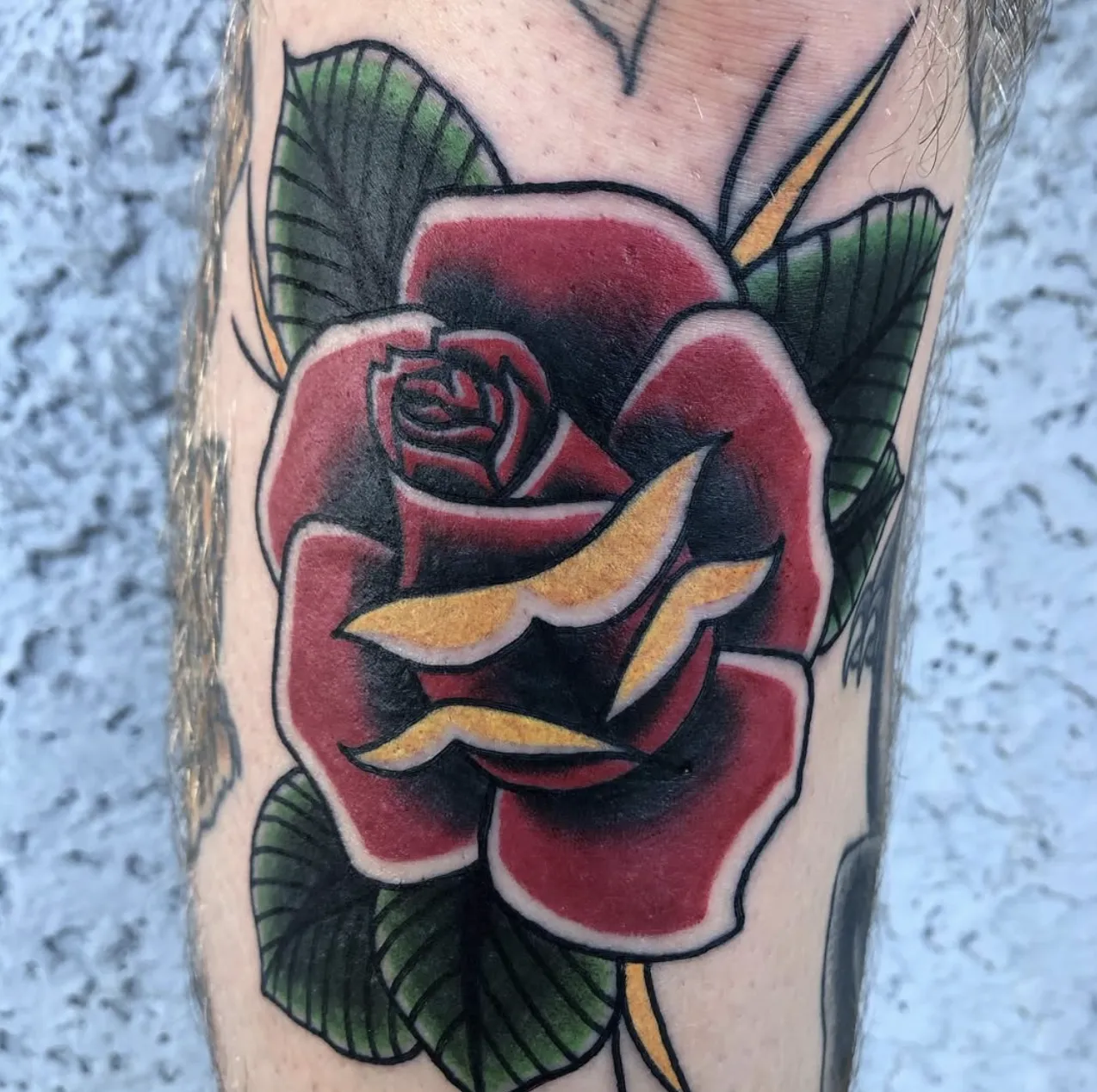
American Traditional tattoos are built on heavy black outlines, a limited palette of black, red, yellow, and green, and symbols with widely shared meanings drawn from sailor and working-class culture. Core motifs like swallows, anchors, panthers, and nautical stars stand for resilience, protection, navigation, and loyalty — themes picked for their staying power, on the skin and in the mind.
That combination of immediate visual clarity and rich heritage is precisely why classic tattoo symbolism still resonates so strongly today. Because these images were designed to communicate instantly through high-contrast black ink and primary pigments, their meanings don't fade into vague abstraction. The symbolism carries an inherited, unmistakable weight, giving you a timeless visual vocabulary that honors a century of tattoo history while speaking directly to your own life experience.
Where Traditional Symbolism Comes From
Much of what people now call Old School or American Traditional grew out of port cities in the early and mid-20th century, where sailors, dockworkers, and servicemen picked designs off shop walls known as flash sheets. Norman "Sailor Jerry" Collins, working out of Honolulu, is one of the style's most cited figures; he refined the bold outline, tightened compositions, and pushed color saturation in ways that shaped the look artists still reference today.
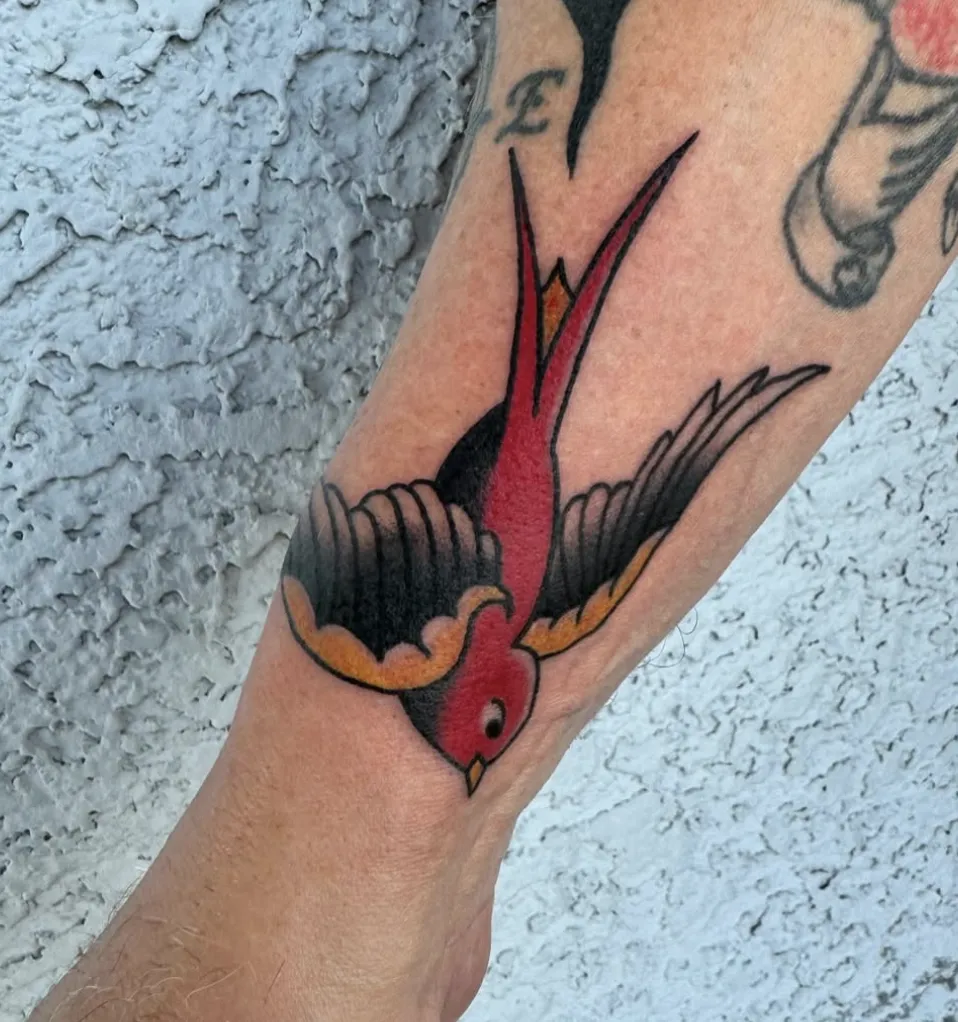
Some of the milestone meanings are practical, not poetic. Sailors traditionally earned a swallow tattoo after logging 5,000 nautical miles at sea, with a second swallow marking 10,000. An anchor could mark a completed Atlantic crossing, and a full chest piece could signal rank, survival, or years spent at a trade. None of it was random. Every symbol carried immediate meaning, both to the person who wore it and to anyone who recognized it.
American Traditional is just one chapter in a much larger global story. To see how different artistic traditions, rituals, and cultural practices have shaped body art around the world, take a deep dive into tattoo heritage.
Common American Traditional Symbols and Their Meanings
Every classic image carries a starting meaning, then bends toward whatever the wearer brings to it.
-
Anchor: Stability, loyalty, grounding, and safe return. It is a strong choice for someone who wants to honor a person, place, belief, or chapter that keeps them steady.
-
Swallow: Travel, freedom, return, devotion, and endurance. Swallows are often chosen by people who have moved through change and still found their way back to themselves.
-
Rose: Love, beauty, grief, passion, and remembrance. A rose can stand alone or soften harder images like daggers, skulls, and snakes.
-
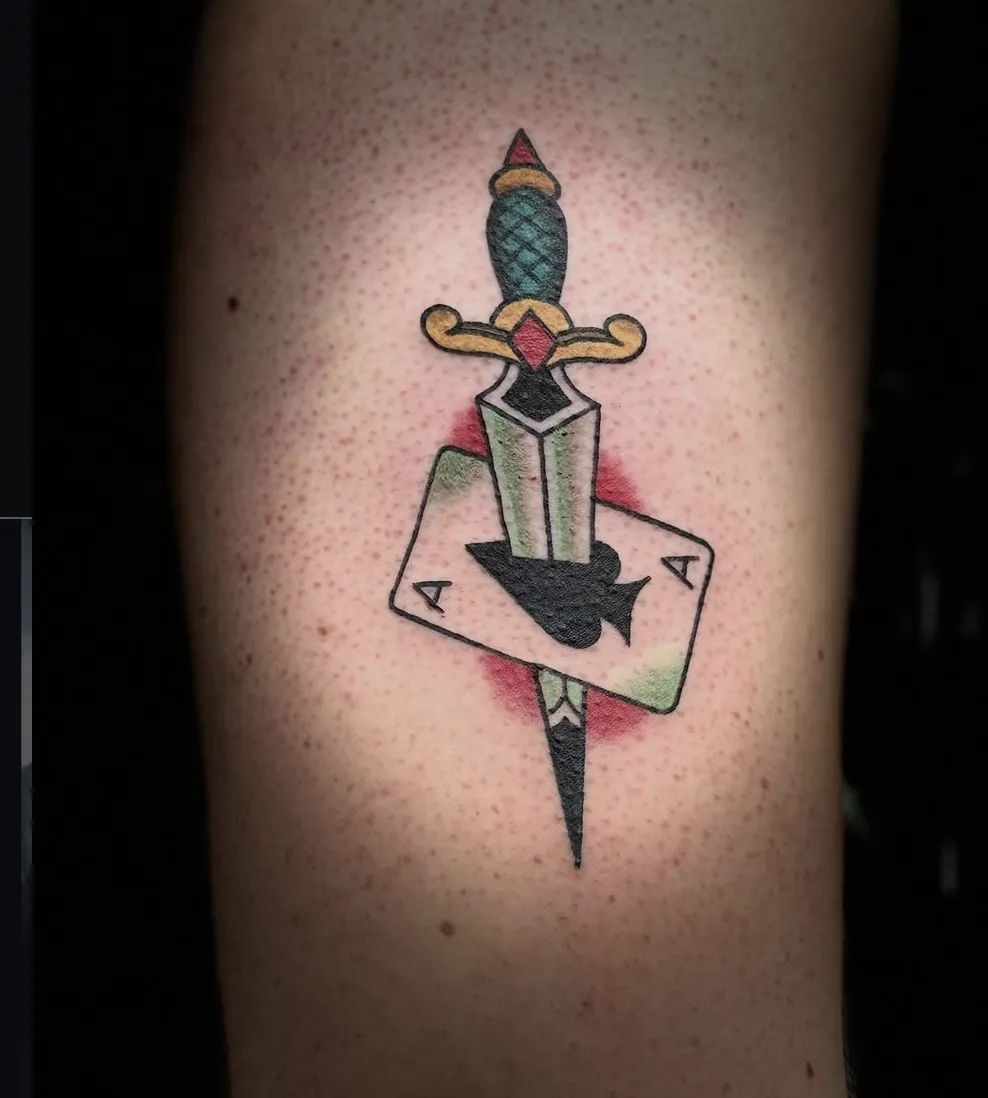
Dagger: Courage, sacrifice, betrayal, protection, or cutting ties with the past. Its meaning often depends on what surrounds it.
-
Heart: Love, devotion, loss, faith, or commitment. Banners, names, flames, or thorns can make the meaning more specific.
-
Eagle: Freedom, strength, independence, and pride. It has a commanding presence and works well in larger placements.
-
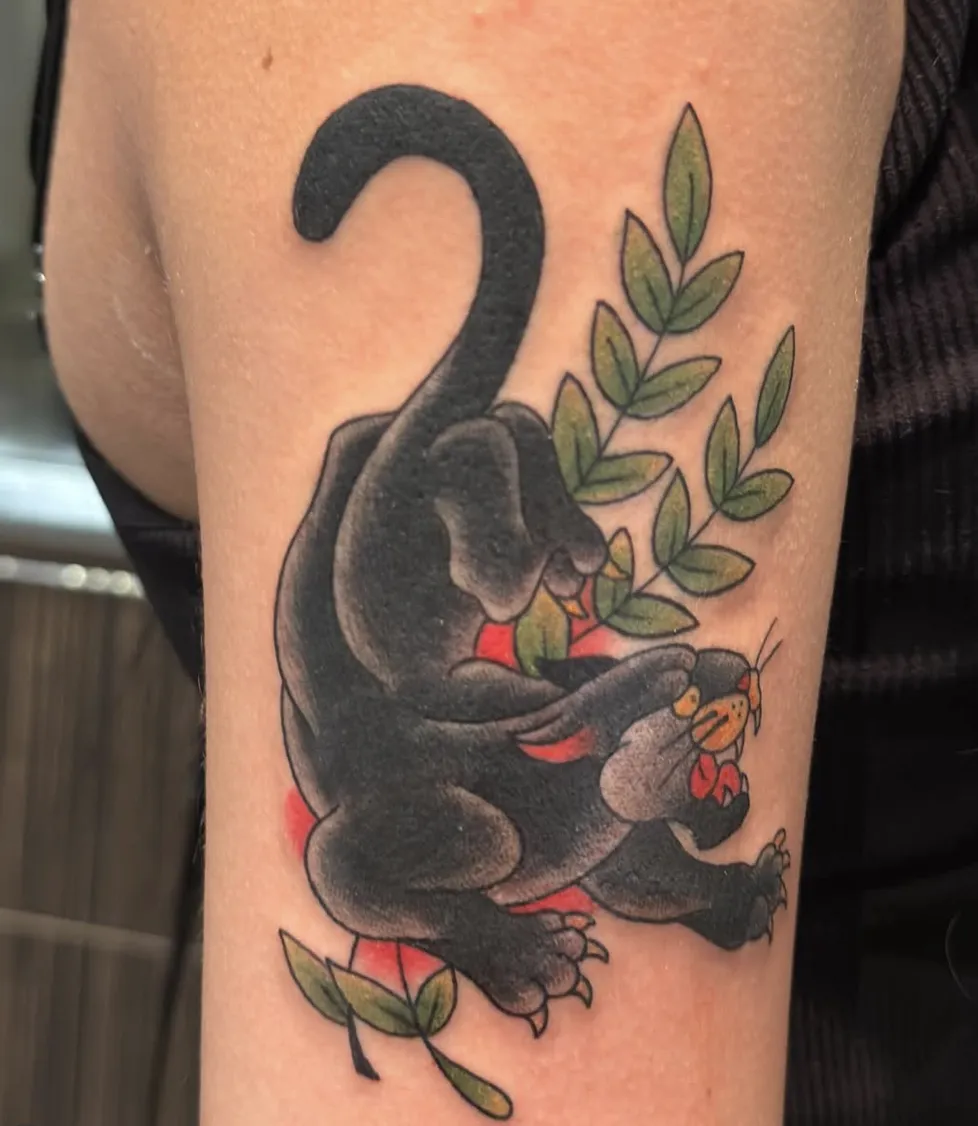
Panther: Power, mystery, survival, and controlled aggression. The crawling panther is one of the boldest traditional images.
-
Ship: Adventure, direction, uncertainty, and the will to keep moving. It can represent a literal journey or a personal crossing.
-
Snake: Transformation, danger, wisdom, rebirth, or protection. Snakes are flexible designs that can wrap around limbs or frame other symbols.
-
Skull: Mortality, courage, change, and acceptance. In traditional work, a skull is not always dark; it can be a reminder to live fully.
The best designs often combine symbols to create a fuller message. A ship paired with a swallow can speak to both adventure and the pull toward home. A heart wrapped in a banner turns a familiar shape into a specific tribute.
Built to Last: The Craft Behind Bold Linework
The heavy black outline that defines American Traditional work is not a stylistic accident. It exists because thick black lines hold their shape as skin stretches, sun-fades, and ages, while thin or delicate linework tends to blur first.
Color choice follows a similarly practical logic. Early tattooers relied heavily on deep black, red, and green because those specific pigments packed densely into the dermis and held up well over decades. Yellow was brought in to create maximum visual contrast and make the darker ink pop from across the room. Despite the apparent simplicity, mastering this balance of color and contrast requires real technical discipline. Working with an expert Traditional artist at Club Tattoo, who knows how to pack pigment properly, ensures your tattoo stays clean, sharp, and readable for years to come.
Old School vs. Neo-Traditional: What's the Difference?
Old School and American Traditional refer to the same historical lineage — bold lines, limited palette, flash-driven imagery. Neo-Traditional keeps the strong outline and readable symbolism but opens the door to expanded color ranges, more illustrative detail, and compositions borrowed from Art Nouveau and modern illustration. Neither style is more "correct." They solve for different priorities: longevity and clarity in one case, added visual complexity in the other. For a closer side-by-side, this comparison of neo-traditional vs American traditional tattoos breaks down where each style tends to work best.
Choosing Your Design, Tattoo Artist, and Placement
Start with a plain-language answer to one question: what do you want this tattoo to represent? Freedom, loyalty, grief, and family are common starting points, and each one maps naturally onto existing traditional symbols rather than requiring something invented from scratch.
Placement matters just as much as the symbol itself. Traditional pieces are built for maximum readability, so open areas like the forearm, calf, or upper arm showcase bold linework far better than high-friction joints or heavily creased skin.
Once you have a motif and location in mind, the final step is finding an artist whose technical execution aligns with your vision. You'll want to review portfolios carefully, looking for clean, consistent linework, solid black packing, and balanced composition.
Exploring Arizona tattoo artist portfolios, Las Vegas studio portfolios, and Texas tattoo artist galleries gives you a great way to compare different artist approaches side-by-side before booking your consultation.
Aftercare and Long-Term Color Retention
A bold outline and saturated color still depend on how the tattoo heals. Keep the piece clean, avoid picking at it, moisturize lightly, and skip prolonged soaking while it heals — and always defer to your artist's specific instructions over general advice, since techniques vary shop to shop. Reviewing our essential tattoo aftercare instructions before your appointment gives you a clear routine to follow instead of guessing during the first sensitive days.
A Tattoo Style Built to Outlast Trends
American Traditional tattoos endure because the style solves two problems at once: it reads clearly today, and it stays legible decades from now. Whether you're drawn to an anchor for stability, a swallow for a journey completed, or a panther for raw presence, the meaning you choose is yours to shape around your own life. When you're ready to talk through a design with an artist who works in this style daily, online tattoo appointment booking is the fastest way to get a consultation on the calendar.
Frequently Asked Questions
Why do traditional tattoos hold up so well over time?
The bold outlines and dense black packing used in traditional work resist the blurring and fading that thinner linework experiences as skin ages. Fewer fine details also means less for the eye to lose over the decades.
What is the difference between Old School and Neo-Traditional?
Old School and American Traditional describe the same bold-line, limited-palette style rooted in flash sheets. Neo-Traditional builds on that foundation with a wider color range and more illustrative detail.
How do I choose the right traditional placement?
Favor open, flatter areas of skin — forearms, calves, upper arms, and the back — where bold lines have room to stay crisp. Joints and heavily creased areas tend to distort linework faster.
Do traditional tattoo meanings ever change?
Yes. A symbol's historical meaning is a starting point, not a rule. Many people adapt classic imagery like swallows or roses to reflect a personal milestone rather than the original maritime or military context.
Is traditional style a good choice for a first tattoo?
It can be! The bold, readable nature of the style tends to age well, which matters for anyone committing to their first piece.